 © Bosina FoodSouth Africa's largest ginger and garlic importer, by their own estimation, has big plans for the future.
Jacky Zhang of Bosina Food is currently interviewing for the post of farm manager on their newly-acquired vegetable farm south of Tzaneen, where they'll be establishing a ginger crop in a year's time. Initially, it will be South African-bred rhizomes, but eventually, Zhang says, he wants to establish Thai ginger. Turmeric will also be planted, as well as green peppers.
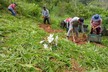
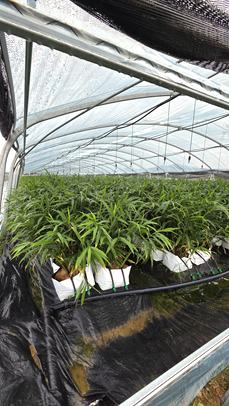
Right: This farm in Zhang's hometown, Laiwu district, Jinan City in China's Shandong Province, grows disease-free ginger propagation material
"That's my plan: I want to plant enough ginger not only to supply the local market but also to export to Europe and, who knows, to the United States as well. I would like to try the Chinese way of planting the ginger in South Africa. As the son of a Chinese ginger farmer, I understand ginger better than other fresh produce."
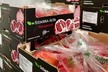
Since 2014, Bosina Food has supplied South African supermarket chains and the wholesale markets in Johannesburg, Pretoria, Durban, and Cape Town with ginger grown in Zhang's home province of Shandong, as well as in Hebei and Liaoning provinces in China.
Zhang points out that Chinese ginger farmers plant nothing else on their small, roughly half a hectare farms, while South African ginger farmers have far larger farms with other crops like avocados and mangoes. "One container is 24 metric tonnes of ginger, and it comes from two or three farmers. You can see they're very small, but their yield is much higher than South African ginger fields. That's a very big difference."
He continues: "Sometimes Chinese ginger farmers lose money because they planted too much and the price is too low. When they export to South Africa, the Chinese ginger squeezes the market space for the local ginger, and local ginger farmers have to drop their ginger price and lose money sometimes."
Local ginger market out of touch with global price movements
China, the dominant ginger producer, sets international ginger price trends, along with its competitors like Thailand and Brazil. "As we know, the quality of Thai ginger is better than Chinese ginger, and therefore usually the price is a little bit higher than Chinese ginger. But when the Chinese ginger price drops, the Thai price has to drop as well, and the price for South African-grown ginger has to follow," he says.
He remarks that it seems to him that South African ginger farmers are not in touch with the global ginger price movement. "Local farmers have to get more information about the international ginger market in order to make their plans. Chinese ginger has a cost advantage: the planting cost is about 50% of the South African planting cost."
However, when freight and importation costs are added, the price of imported ginger is comparable to South African ginger on the local market.
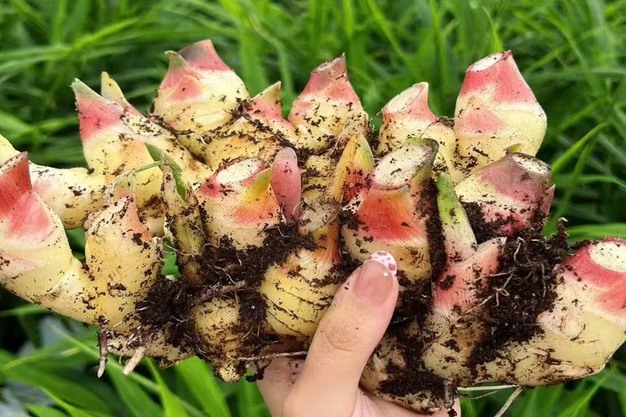
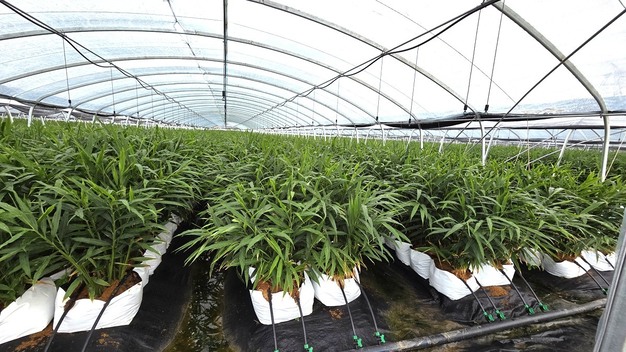 © Bosina FoodVirus-free ginger, grown for seed, with its high yield, can be sold at a price four times that of ginger grown for consumption
Grey channel garlic undercutting legal imports
China fully controls global garlic production, and in Zhang's view, there is no point in South African garlic growers trying to compete. "For garlic, I think the South African weather and soil conditions are not as good as China. My suggestion is that maybe the local garlic farmers should drop the idea of planting garlic."
The garlic imported by Bosina Food is grown in Shandong and the nearby provinces of Jiangsu and Henan, China.
South Africa has had an anti-dumping duty in place on Chinese garlic for a number of years to protect the domestic industry. "Because of the anti-dumping duty, we pay a lot of money to the South African Revenue Service. We have to pay the duty immediately upon bringing in the containers, so we require more cash flow for garlic. It also means the total cost for one container of garlic is much higher than ginger because of the duties."
He expects the duty, currently R19.25 per kilogram, to be renewed and perhaps kept at in same amount in 2026 for another five-year term. He maintains that the government makes a lot of money out of Chinese garlic imports, but it pushes up the price of garlic for South African consumers and makes it, he believes, unnecessarily expensive.
"This winter in South Africa, we came across this problem of illegal garlic that has been affecting our business a lot," he says. Customers were showing them photos of garlic sold on wholesale markets at unrealistically low prices. "This garlic is exported from China to Mozambique and then comes into South Africa without paying the duty. This year, they sold at such a low price, we couldn't compete with this garlic; it was much cheaper than ours. We lost a lot of business because of illegal garlic."
Zhang says that more and more illegal garlic is coming up in this market. "The garlic order from the supermarket chains is still ok, but this affects our business in the wholesale markets, and this winter our garlic has moved slowly. Maybe, therefore, we should spend more time on our ginger business in the future."
 © Bosina Food
 © Bosina FoodFor more information:
Jacky Zhang
Bosina Food Pty Ltd
Tel: +27 71 102 9273
Email: [email protected]