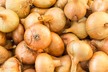
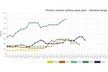
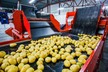
The Peruvian onion sector is experiencing a striking contrast: exports are growing, but there is a profitability crisis. Exports have increased and Peru is gaining ground in the international market, but prices—both locally and internationally—remain at historically low levels, stated Fernando Gómez, general manager of Semiagro.
 © Semiagro
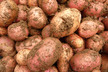
"The good news is that the Peruvian onion is strengthening its position regionally and internationally thanks to its quality, new varieties, and more professional cultivation management. Neighboring countries like Ecuador, Colombia, Bolivia, and Chile are increasingly buying red and pink onions from Peru because of their good shelf life. Demand is also growing in the United States and Spain, especially for the mildly sweet yellow onion," Gomez stated.
 © Semiagro
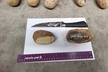
"A key factor in this growth is the use of improved seeds, such as Century, Campolindo, Plethora, and Sweet Caroline yellow varieties, and the Golazo and Noam red onions. These varieties, together with the new generation of agronomists' better technical management, have allowed the sector to supply the market practically throughout the year," he said.
However, this increase in supply also has a downside. "In the first half of the year, overproduction has driven prices below production costs. This is a critical situation for many farmers," Gómez said. The average cost of production stands at around $0.25 per kilo, but sales prices have fallen below that threshold.
 © Semiagro
Peru isn't alone in facing this problem. "It looks like a global problem. We're seeing similar developments in Argentina, Chile, Central America, Mexico, and Spain," Gómez said. This is partly due to weather conditions affecting production, but also because growers expand as soon as prices become attractive, resulting in oversupply.
"Peru doesn't compete directly with Chile or Argentina's traditional yellow onions because its offer is focused on sweet Granex onions. Red and pink onions mainly go to Colombia, Ecuador, Bolivia, and, to a lesser extent, Europe and the United States, where interest in the Peruvian product is growing thanks to the popularity of Peruvian cuisine," Gómez stressed.
 © Semiagro
Gómez is optimistic about the future. "Many growers have scaled back their plantings due to the poor prices. This could lead to lower supply and, therefore, better prices starting in August. In addition, the favorable exchange rate in Europe could open new opportunities. However, logistical and financial bottlenecks remain a challenge," he said.
 For more information:
Fernando Gómez
Semiagro
Peru
Tel: +51 940 323 159
Email: [email protected]
www.semiagro.com.pe