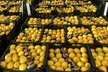
The first container of 23,000 kilos of Ecuadorian Tango mandarins destined for California was loaded at the port of Guayaquil on July 14, marking the beginning of exports of this fruit grown in Pimampiro, in the province of Imbabura. The shipment will depart for the United States on July 21, after completing the logistical and sanitary controls required by U.S. authorities.
This shipment is the product of five years of technical work and negotiations between Agrocalidad, the Ecuadorian plant health agency, and the Animal and Plant Health Inspection Service (APHIS) of the United States Department of Agriculture (USDA). The Tango mandarin is highly valued in the U.S. market because it is sweet, easy to peel, and seedless, stated Larry Rivera, Agrocalidad's General Plant Health Coordinator.
The container was prepared at the authorised Durexporta collection center, complying with export protocols: installation of temperature sensors, issuance of the phytosanitary certificate, and a cold treatment at -1.11 °C for 15 days, a requirement to eliminate quarantine pests such as the fruit fly (Anastrepha spp. and Ceratitis capitata).
The logistical planning includes a one-week margin to pass customs inspections, cold treatment, and anti-narcotics controls, stated Santiago Latorre, the general manager of Ecuagroimport, the export company.
The initiative is part of a project that already has 32 hectares planted. Gustavo Cepeda, the Ministry of Agriculture's Undersecretary of Strategic Agricultural Chains, said that this first harvest marks the beginning of a production scheme that aims to reach between 30 and 32 containers per year from 2025. The Tango variety can yield up to 60,000 kilos per hectare and has a flavor profile with a Brix/acidity ratio of 10:1, which is in high demand in the United States, he stressed.
The harvest schedule also gives Ecuador a strategic advantage. "Between July and August, there is almost no international supply of this variety. That's where we are the only country with availability," Rivera said.
In addition to Pimampiro, crops are already being developed in other areas of Imbabura. In parallel, new destinations are being explored. Customers in the EU (where Ecuador can export this product) are interested in receiving samples, and there are negotiations with Middle Eastern countries.
"The goal is for Ecuadorian mandarins to have a presence in stable markets that guarantee sustainable returns and allow the export sector to grow with confidence," Cepeda concluded.
Source: eluniverso.com