In the flexible packaging sector, where sustainability and performance go hand in hand, the Vibac Group collaborates with companies in the fruit and vegetable industry. The Italian company is not directly involved in the fruit and vegetable sector, but it plays an active role in the advanced fresh-cut segment. It has projects that use innovative technologies, such as CTG film, and recent initiatives like the Velo project, which aims to minimize the environmental impact of packaging.
Giuseppe Leone, Vibac's R&D and product manager, explains: "Our core business is producing transparent, biaxially oriented polypropylene (BOPP) film for snacks, pasta, and confectionery. In some applications, converters transform this uncoated film by printing on it, laminating it, or equipping it with protective barriers. Our goal is to make this packaging entirely mono-material in PP5 so that it can be easily recycled."
 © Vibac
CTG film: transparency and functionality for the fresh-cut segment
The CTG film is one of Vibac's flagship products for fresh-cut fruits and vegetables. Developed over 20 years ago, it remains in high demand due to its technical properties. "CTG is an anti-fog film that prevents condensation from forming inside the bag when fresh produce is chilled in supermarket refrigerators," explains Leone. As a result, salads remain visible and visually appealing, making a strong impact on the shelf.
The material is typically supplied in thicknesses ranging from 25 to 40 microns. The 25-, 30-, and 35-micron formats are the most popular. Large companies appreciate its reliability and transparency and use it for their packaging.
The Velo project: Less thickness, less plastic
In January 2025, Vibac officially launched the Velo project, a revolutionary step towards sustainability. After six months of intensive work on production lines and parameters, the company succeeded in reducing the thickness of CTG film from 25 to 18 microns. The first reel left the factory in April 2025.
"This reduction has two advantages," Leone emphasizes. "There is a decrease in the amount of plastic in circulation, and customers purchase fewer kilograms of material to obtain the same quantity of bags." The new film is also used in paper laminate solutions, which are in high demand in Northern Europe." The result is a transparent window pack that combines aesthetics, functionality, and sustainability, as paper and plastic can easily be separated during recycling.
 © Vibac
Sustainable raw materials and certifications
Vibac's green strategy focuses on using innovative, sustainable, certified raw materials. The company is ISCC PLUS certified and promotes the use of polymers from renewable or recycled sources. Thanks to the mass balance mechanism provided by the ISCC certification, Vibac can track and identify the sustainable content in its films.
"It is a complex but necessary process," says Leone. "Without these tools, integrating sustainable raw materials into an industrial production cycle would be nearly impossible. Sustainability is at the core of our strategy. For instance, we collaborated with a major potato chip producer to develop packaging made from sustainable materials sourced from a biocircular economy, such as waste cooking oil. Historically, pyrolysis oil was used for this purpose. This process converts plastic waste back into raw materials for production and adheres to the ISCC mass balance approach guidelines. The use of recycled cooking oil is also becoming more widespread among companies that specialize in the fresh-cut segment."
Technology and international presence
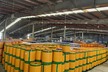
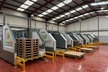
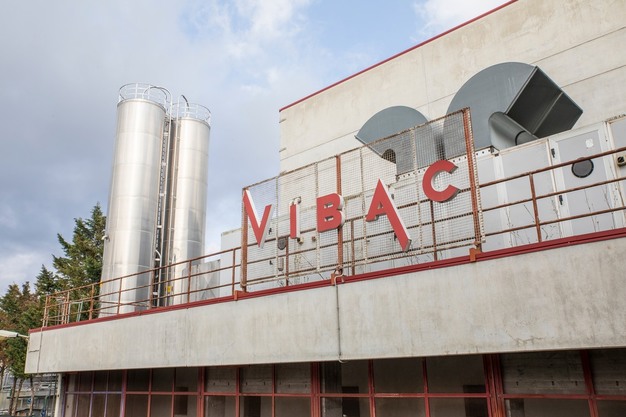
Significant technological investments are required to produce an ultra-thin, 18-micron anti-fog film. An extrusion plant can be as long as a football field. Reducing the thickness of a structured film from 25 to 18 microns on such a large-scale machine required us to completely reset the process parameters. It was quite complicated, but we overcame the challenges, and now the material is in high demand."
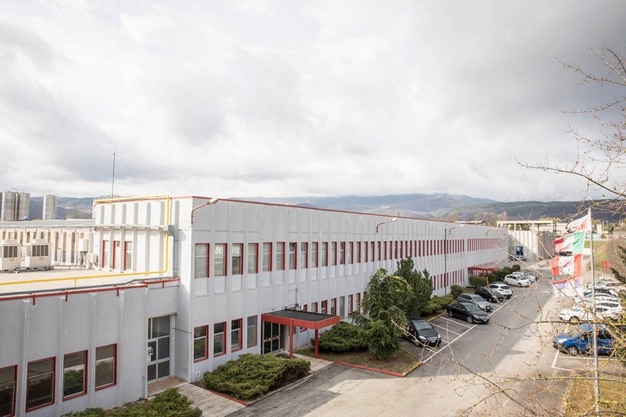
The Vibac S.p.A. Group is based in Ticineto, in the northern Italian region of Piedmont. Its production facilities are located in Italy, Canada, and Serbia. There are two main divisions: BOPP (biaxially oriented polypropylene) film and adhesive tapes.
 © Vibac
As for our film plants, we only operate in Italy. We have two extrusion lines and one finishing line in L'Aquila, in the Abruzzo region, and two lines and three metallizers in Viggiano, in the Basilicata region. The Velo project has been applied to two types of film: film made in Viggiano, which is typical for bakery, dried fruit, or polyester replacement, and CTG film in the L'Aquila plant. In Viggiano, we produce 12-micron heat-stable film and 10-micron metallized film. This film is used for crisp bags and coffee packaging, among other things," Leone points out. The company's market is global, with customers in Europe and an expanding presence in America, Asia, and Africa.
Looking to the future
"The goal is clear: to replace all multi-material structures with polypropylene mono-material technologies and increase the use of sustainable raw materials. Vibac is ready to provide solutions for emerging fields such as vertical agriculture that require distinctive, high-performance, low-impact packaging," the product manager explains.
"We are always looking for partnerships and new opportunities. Those interested can learn more with our CTG film data sheets, which are available in R (from waste oil) and P (from pyrolysis) versions." Sustainability is more than just a word to us; it's a tangible path forward for our development," concludes Giuseppe Leone.
Click here for the technical data sheet of the standard CTG film.
Click here for the CTGP Circular (pyrolysis from plastic recycling) film datasheet.
Click here for the technical data sheet of CTGR Bio-Circular film (from used cooking and restaurant oil).
For more information: Vibac S.p.A.
BOPP Film & Tape division
Strada Ticineto, Salita S. Salvatore
15040 Ticineto (AL) - Italy
Tel.: +39 0142 41 32 00
Fax: +39 0142 41 19 16
[email protected]
www.vibac.it