The new fig campaign has had a rocky start, especially with the early figs, called fioroni in Italy, which have always been a key part of the Apulian production sector. While the season has yet to begin in Molfetta, the harvest and marketing of the product have already begun in Brindisi.
The fig campaign in the Brindisi area began well in advance, but with serious difficulties. According to Francesco Palasciano (pictured below), the owner of Cuore Verde farm in Pezze di Greco-Fasano in the province of Brindisi, "there was a significant fruit drop in the days leading up to the harvest," greatly impacting the available quantities. The campaign began on 23 May 2025, and is already well underway, heading towards conclusion while confirming a short, concentrated production window.
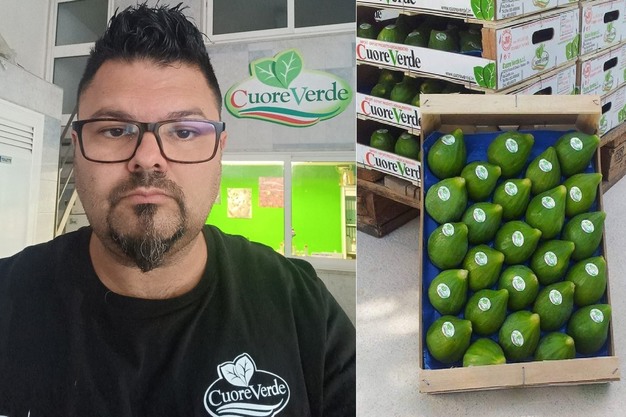 © Francesco Palasciano
"It looked like it would be a promising year," says Palasciano. "However, a sudden frost damaged the green and black flowers, which fell to the ground shortly afterward." On top of that, the fruit ripened 17 to 23 days earlier than usual. Harvesting began as early as the end of May, well before the traditional St. Anthony's Day period around 13 June. The problem is that the fruit arrives all at once and is gone within a few days. The losses are significant, with an estimated 70 percent drop in spring production, especially in rural and hilly areas of Cisternino, Martina Franca, and Castellana. "In some cases, the plants did not bear fruit at all."
Despite the setback, Palasciano remains hopeful about the September fig campaign. Thanks to the winter rains, the young branches have grown well, which could make the campaign longer and more productive. However, there is still concern about extreme heat waves that could burn the fruit. "The real problem is climate change. The fig tree can no longer adapt to its former habitat. Every year, it produces less. If this continues, many will be forced to switch to growing different crops." There are also commercial difficulties: some of the product is exported, for example, to Switzerland, but only thanks to long-standing relationships and reduced volumes. "This year, we will focus more on the Italian market," says the entrepreneur. "When there is little produce, it means the plant has suffered and the fruit won't last long."
 © Michelangelo De ChiricoThis drastic reduction in early fig production is also evident in other areas of Apulia. "Unfortunately, production is very low this year. The continuous temperature fluctuations have greatly affected it," says Michelangelo De Chirico, the sales manager of the eponymous company in Molfetta, a city in the province of Bari. "Many fruits are falling just as they are about to ripen," explains Michelangelo De Chirico (pictured on the right), the sales manager of the eponymous company in Molfetta, a city in the province of Bari. He speaks in a realistic but worried tone. "The region most affected is the area between Molfetta, Giovinazzo, and Terlizzi, where the phenomenon of early fruit dropping is having a particularly severe impact on crops."
To make matters worse, the recent frost wave hit suddenly and damaged the most sensitive fruit. "In my opinion, production will drop by around 50 percent this year," the entrepreneur estimates. The decrease will primarily impact the early fig harvest, which ripens from late May to early June. The situation regarding figs harvested from mid-August onward will become clearer in the coming months. Much will depend on rainfall and weather conditions after the current harvest.
"There is demand for the product, but there is a shortage. It's a big loss," adds De Chirico. "Last year, I started collaborating with a company in Switzerland and sent them an initial supply. After testing the samples, they were ready to order large volumes. Unfortunately, I won't be able to fulfill those requests this year."
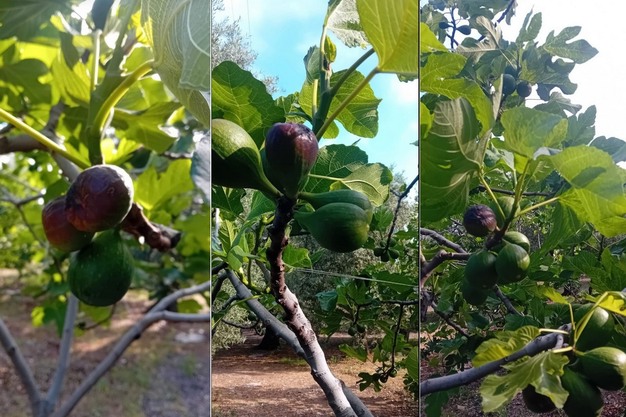 © Michelangelo De ChiricoMany fruits (the dark ones in the pictures above) are falling just as they are about to ripen
It's the same old story. The year 2023 was not exceptional in terms of quantity or quality. It seems that 2025 will present the same challenges, compounded by an even more unpredictable climate. "We'll have a clearer picture in the coming days once the first fruits are harvested. In the meantime, De Chirico, like many other operators, is keeping a close eye on the weather, hoping for stability that will save at least the second half of the season."
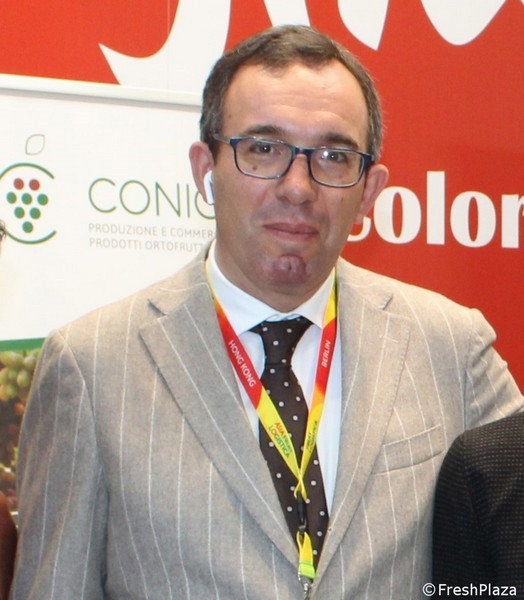 © Maria Luigia Brusco | FreshPlaza.comNicola Coniglio (pictured on the right) of the Coniglio company in Adelfia, in the province of Bari, confirms, "Even this year, production of early figs is poor due to frost at the beginning of April. The situation is comparable to the previous two years," he explains, highlighting the impact of the unfavorable weather conditions on the plants' yield.
"Nevertheless, the level of interest in the product is high, and there is a prevailing sentiment of expectation and anticipation," Coniglio adds, hinting at the fact that despite the anticipated 50% decline in supply, consumer demand remains strong.
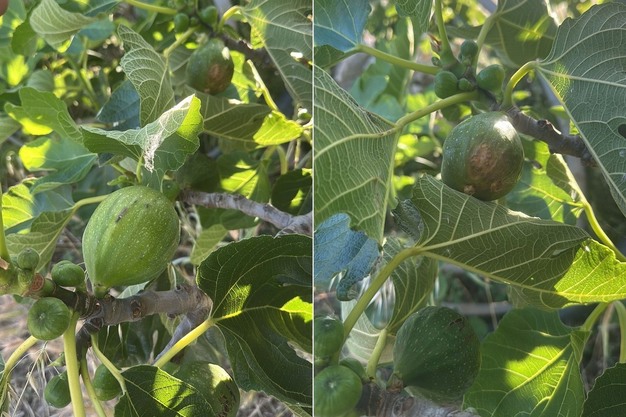
Gaetano Modugno, the head of the Evergreen company in Polignano a Mare, further confirms the poor condition of the fig trees in northern Bari. "The heavy rains and sporadic hailstorms that have hit the area in recent weeks have compromised the quality of the early fruit. The fruit is loaded with water and sugar," Modugno explains. "For this reason, it will be difficult to export because hardness levels are lacking, and it is prone to bruising." Foreign markets, accustomed to high standards such as those of Turkish figs, do not respond well to fruits in these conditions. For this reason, many local companies focus on late varieties, which are more resistant and of higher quality.
 © Gaetano Modugno
Despite the challenges, the market is showing some encouraging signs. "Several Northern European customers have expressed interest in figs despite being aware of this season's challenges," Modugno concludes. "This shows that even in a complicated year, Italian figs continue to be appreciated abroad by real connoisseurs. Even if the visual quality is not up to expectations."