Cherry production has dropped by between 70% and 100% in the south-east of the Bari province (Puglia) as a result of frosts in March and April. The early Georgia and Bigarreau cultivars have been severely affected, but the greatest damage was inflicted on the Ferrovia variety, with the risk of a higher incidence of foreign produce on the shelves. After inspecting the fields, Coldiretti Puglia is calling for a state of emergency to be declared and stricter checks on the origin of the batches on sale, as prices of up to €23.30/kg have been reported in Milan.
 © Dott. Nicola Coniglio SURL
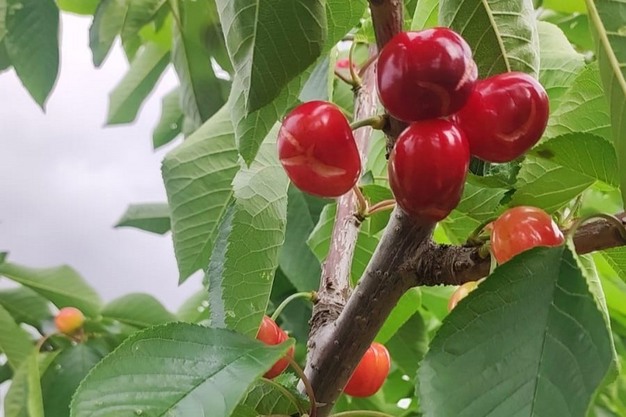
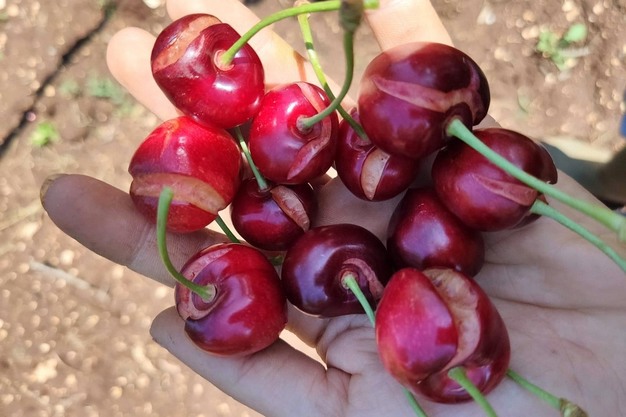
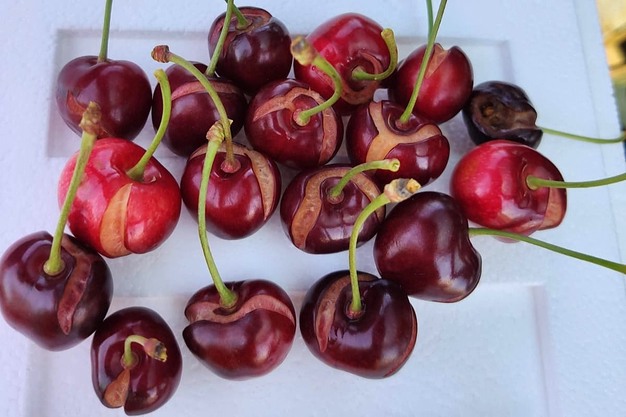
"Production has collapsed this year: the loss is estimated at at least 70% of the harvest, a shortfall that has made prices skyrocket. Producer prices today (19 May 2025, ed.) range between €6 and €10/kg. As a result, the starting cost of the produce is between €10 and €15, a level that puts pressure on the entire supply chain and shifts the burden of price increases to end consumers," reports Nicola Coniglio, owner of Coniglio di Adelfia in the province of Bari. "After flowering, the plants lost about 80% of their production potential. We started with low volumes and very high production prices, but the produce was defective: twin fruits, wind damage, and cracks. We had to discard almost 30% of it in the warehouses."
 © Dott. Nicola Coniglio SURL
"The problems had already begun with the frost in early March, which burned the flowers - we are talking about a complete loss of production in some cold areas. This is no exaggeration: it really is a natural disaster that has affected all varieties throughout the Puglia region," adds Coniglio. "Another 20-30 mm of rain fell last Friday (16 May 2025, ed.), causing an additional 50-60% damage to the fruit that was already ripe or almost ripe. I've seen prices of €25-30/kg, but producers are only getting €9, and half of the batches are second choice."
 © Dott. Nicola Coniglio SURL
Other producers also confirm that the cherry situation has been getting worse for three years now. It is well known that cherries are a delicate product at all stages - from setting and harvesting, to storage and transport - but even the higher prices are still unable to cover the costs that producers face to protect themselves against losses as quantities gradually decrease. "Prices are really high in fruit and vegetable shops in northern Italy," report producers, who also point out that "modern facilities equipped with protective measures require a very high initial investment, so much so that cherry cultivation ends up being affordable only for large, structured groups that can sustain the costs in the medium term."
What emerged is confirmed by companies located in the north of Bari. "There is a significant drop in production," explains Alessio Baldini, key account sales manager at La Vera in Bisceglie. "Perhaps the estimate of a 70% drop might be slightly exaggerated, but the collapse in production is clear. From a quality point of view, there are few physiological problems with the fruits, and the real issue is the scarcity of the product." As evidence of the general difficulties at the moment, Baldini adds that, "last week we were in Greece, where the situation is not very different: they are talking about a drop in production of around 30%."
 © Maurizio Di Pierro © Maurizio Di Pierro | 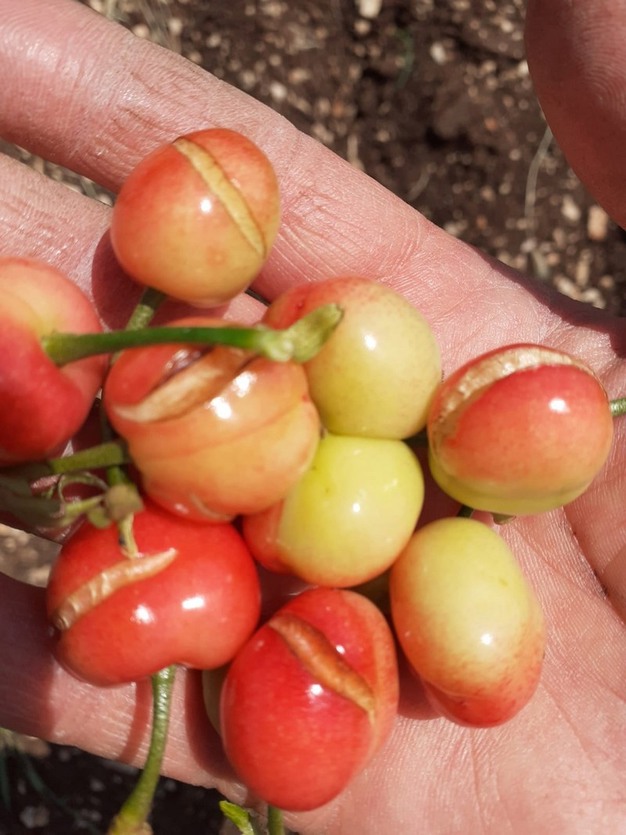 © Maurizio Di Pierro © Maurizio Di Pierro |
Maurizio Di Pierro, an agronomist and owner of a farm in Bisceglie (Barletta-Andria-Trani), explains that "cherries are unfortunately very susceptible to various climatic and environmental variables. The shortage of produce is also due to the continuous uprooting of plants that has taken place in Puglia in recent years, as well as to the age of the local intensive cherry orchards. Most of them date back more than 15 years. It was decided to uproot them, and this is still the preferred option, with no interest in renewing and replacing them with new varieties and modern, perhaps protected, plants. Farmers tend to continue cultivation for as long as possible, but yields are expected to decline further in the coming years."
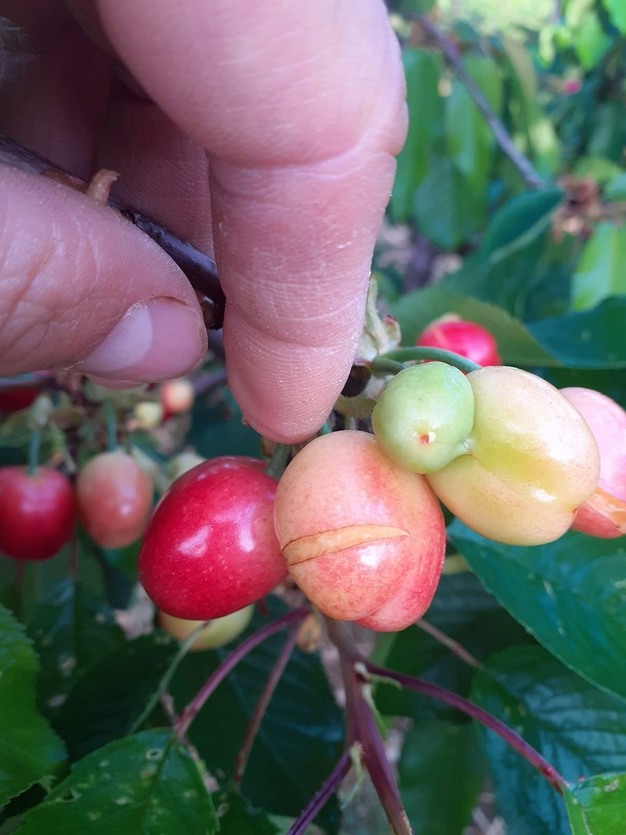
"At the beginning of the season, there were few fruits visible on the plants (also due to late frosts), many of which were twin fruits, especially for the Bigarreau cultivar. Subsequently, hailstorms in early May and heavy rainfall last week further damaged the cherries, causing cracks. This damage is in addition to that caused by parrots, resulting in a further decline in the quantities available this year."
Article written by Maria Luigia Brusco and Vincenzo Iannuzziello