Oregon, the third-largest producer of sweet cherries in the U.S., supplies about 11% of the national market, with the industry valued at $68.2 million in 2022. Most of Oregon's cherry crop is grown in the Mid-Columbia Valley, particularly around Mount Hood and the Columbia River.
However, the state's cherry industry is facing a growing threat from X-disease, a reemerging infection that renders fruit small, flavorless, and unmarketable within two years. The disease spreads rapidly through root grafting and leafhopper insects, and there is currently no cure. The only treatment is the removal of infected trees, a difficult choice for orchardists due to income losses.
Oregon State University (OSU) Extension Service has played a key role in combating X-disease through research and grower education. Led by Ashley Thompson, fruit crops specialist and assistant professor in OSU's College of Agricultural Sciences, the program aims to help growers identify and manage the disease early. Thompson and her team have conducted workshops, and field days, and produced bilingual educational materials to support farmers and farm workers.
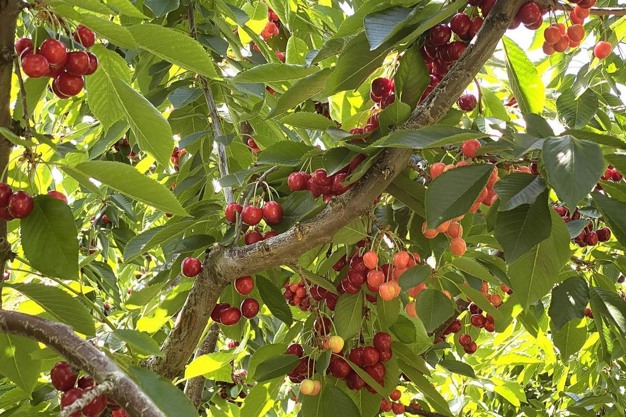
Their efforts have led to the identification of 60 orchards infected with X-disease in Hood River County, based on grower self-reporting and molecular analysis. Thompson's program has received $186,313 in combined grant funding from the Washington Tree Fruit Research Commission, Oregon Sweet Cherry Commission, and Columbia Gorge Fruit Growers. The funding supports research on disease spread, rootstock selection, and replant strategies.
Through three hands-on field days, Thompson has trained 428 participants on virus and symptom identification and presented research at seven events to 795 attendees. The educational outreach has significantly improved awareness and grower collaboration in X-disease management.
One important research finding suggests that costly soil fumigation before replanting may be unnecessary. Instead, the most effective step orchardists can take is purchasing X-disease-free plants to prevent further spread.
Thompson has co-authored several OSU Extension publications, including Getting Ahead of X-disease, How to Spot Signs of X-disease in Cherries, and Identifying Serious Virus and Phytoplasma Symptoms in Your Cherry Orchard. In collaboration with Washington State University, she developed a bilingual X-disease Phytoplasma and Little Cherry Virus Scouting and Sampling Guide.
To date, more than 1,500 bilingual X-disease identification cards have been distributed to farmers and workers in Wasco County. Additionally, 1,000 bilingual information packets, including scouting guides, brochures, and tree tags, have been shared across Oregon.
X-disease has previously devastated cherry production in California during the 1980s and continues to threaten other growing regions. With Oregon's cherry industry playing a vital economic role and supporting local jobs, managing this disease is essential for long-term sustainability.
The combined research and outreach by OSU Extension is strengthening grower engagement and promoting proactive disease management, helping ensure the resilience of Oregon's cherry industry for years to come.
Photo credit: Ashley Thompson
For more information:
Ashley Thompson
OSU
Tel: +1 541 737 1000
Email: [email protected]
www.extension.oregonstate.edu