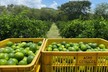
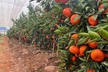
Following the Chinese New Year, temperatures in navel orange production areas remained lower than expected, delaying the fruit's market entry and driving up prices for Fengjie navel oranges. However, with new production areas set to begin harvesting after mid-March, prices are expected to decline.
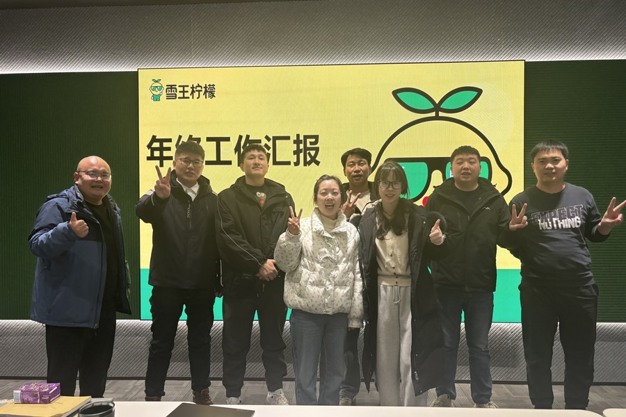
Xuemeng Lemon, which operates lemon packaging facilities across multiple regions in China and exports 100 containers annually, is expanding its navel orange export business this year. Manager Ma, the company's sales director, shared insights on the current market situation: "The slower temperature recovery after the Chinese New Year delayed the market entry of navel oranges, pushing up prices in Fengjie. Currently, production area prices are around ¥6 per kilogram. We anticipate that once navel oranges from new production regions enter the market after mid-March, prices will decrease." He also noted strong international demand for Chinese navel oranges, particularly in Southeast and South Asia, and highlighted improvements in customs procedures that have expedited the export process.
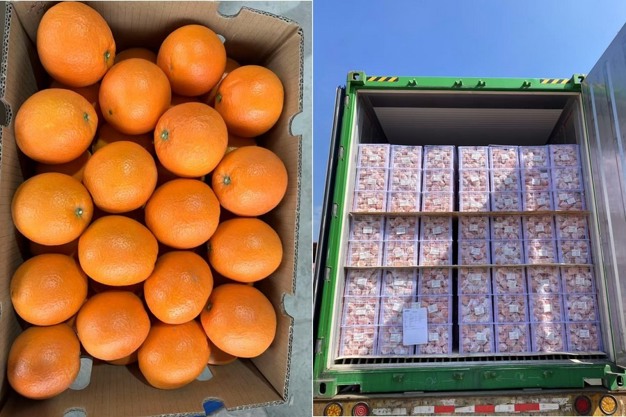
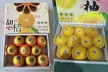
Discussing the competitiveness of Chinese navel oranges in global markets, Ma pointed out that competition has shifted from low-price strategies to quality-driven differentiation. "In the past, fruit exports primarily relied on competitive pricing. Now, the industry is focusing on enhancing product value through premium packaging and improved quality standards," he said. Additionally, the increasing involvement of domestic fruit importers has contributed to industry advancements. The participation of well-known companies such as Pagoda and Joy Wing Mau has further strengthened the market influence of Chinese fruits.
As a newcomer to navel orange exports, Xuewang Lemon leverages its complementary lemon and navel orange production areas to optimize resource sharing. By utilizing the same production facilities and sorting equipment, the company reduces fixed asset costs and enhances production efficiency. "In 2023, our navel orange exports were limited, with most sales focused on the domestic market. However, in 2024, we expect export volumes to increase by 30%. Given strong market demand, we are confident in expanding our export business," Ma stated.
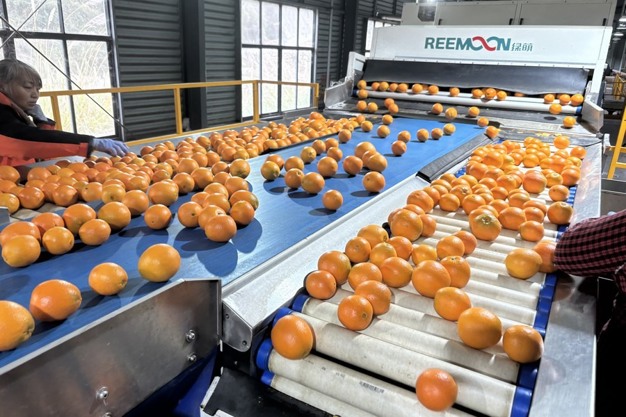
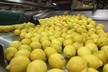
"In the international market, Egypt and Turkey supply lemons early in the season, with their market entry timing similar to that of Chinese lemons. Later, South African and Argentine lemons enter the market. While competition remains strong, the quality of Chinese lemons is steadily improving. Most domestic packaging plants have adopted REEMOON color sorting technology, and our factory operates a 12-channel sorting system—the largest and most advanced in the production area—greatly enhancing processing efficiency and product quality. With last year's export volume increase, Chinese lemons are steadily building a strong reputation among overseas importers."
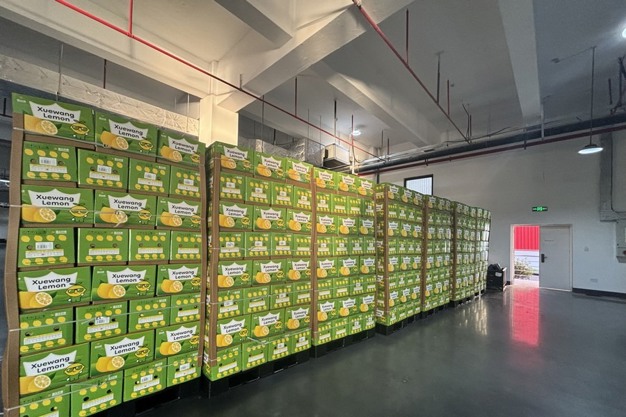
"There are many exporters of lemons and navel oranges in the market, but our core strengths lie in both infrastructure and branding," Ma emphasized. "On the hardware side, we operate the largest packaging facility in the lemon production region and are the only agricultural subsidiary of MIXUE Ice Cream & Tea. On the branding side, we continue to invest in our Xuewang Lemon and Xuewang Orange brands, strengthening our presence in the wholesale market through improved product quality and brand influence." Looking ahead, Xuewang Lemon aims to establish long-term strategic partnerships with high-quality importers in five Southeast Asian countries to further expand its market reach.