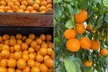
In 2020, Galilee Export, Israel’s largest avocado and one of its top citrus and mango exporters introduced a new product to the market: Red Premium grapefruit. "Our unique growing conditions are what adds genuine value to this grapefruit which in itself it's not a distinct variety," begins Yosi Knop.
"Growers cultivate Red Premium, a Sunrise grapefruit in areas from the northernmost point of Sea of Galilee to the far north of the country. That area, no larger than 300 km2, has a microclimate with scorching summers and freezing winters. An ingenious irrigation system that uses natural rain and snowfall water also contributes to this fruit's unique high quality."
The key ingredient: patience
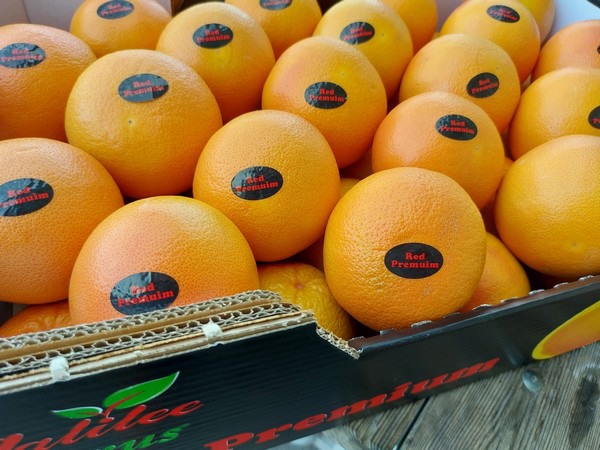
You find Red Premium grapefruit only at growers who have passed a selection process and follow a strict cultivation protocol laid down by Galilee Export. "We don't start along with the Israeli grapefruit season. We, and our growers, are patient. The fruit is checked on the tree every day; only when it meets the correct criteria do we start picking. We don't let market opportunities seduce us if the fruit's not yet ripe," says Yosi.
According to him, the pack-out is, surprisingly, higher than average for grapefruit. That is because of the ideal growing conditions - barring extreme weather events - as well as the great care the growers take throughout the season. Its growers are highly committed, and though they have to invest some money initially, the better market prices the fruit achieves make up for that eventually.
It costs 25% more to grow and process these grapefruit - careful handling is a code word in the packing facilities, too - and that income is still lagging, for now. Especially during the last two seasons, with their high transportation costs, strong shekel, and inflation on all the export markets. "But we have a good product for which - once things calm down - we'll definitely find a customer base willing to pay premium prices."
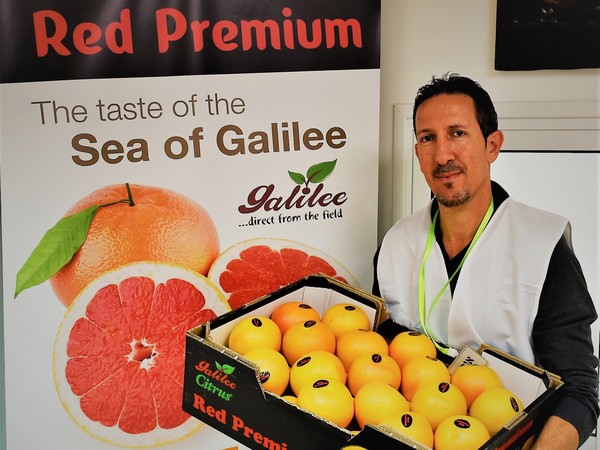
Yosi Knop
High Brix and juice content
According to Yosi, each country and cultivation region's grapefruit has its own average quality parameter levels. "Spain has different average values to Florida or Turkey. Even for Israeli fruit, the market has set the bar at a certain level. Regular grapefruit from Israel, for example, starts the season with a Brix of six to seven and ends with ten. However, we never mix Red Premium with fruit from any other region in Israel, and this special product starts with a Brix of ten, which gradually climbs to 12-13. Other grapefruit begins with 35-40% juice content; Red Premium starts at 45%, rising to 55-60% as the season progresses. These are truly exceptional values. Regarding quality, Red Premium is right up there with Florida grapefruit," he claims.

Left glass is juice of the Red Premium, the other glasses from other grapefruits
Limited acreage
This variety's small cultivation area makes it impossible to substantially increase this variety's acreage or volumes. In 2020, 500 tons were marketed; last year, it was 1,000 tons. This year, 2,000 tons are expected. Those quantities may increase slightly in the coming years. Some orchards have yet to come into production, with more growers declaring their willingness to work according to Galilee Export's cultivation protocols. In the coming years, the company wants to convince all the citrus growers north of Lake Tiberias to join the Red Premium brand. "That would be good for the growers, the region, and the market. Volumes could reach just over 5,000 tons."
Declining consumption in Europe
Galilee Export exports regular quality grapefruit to mainly Europe too. But, despite this fruit's nutritional properties - it is one of the healthiest citrus varieties, according to Yosi - consumption has been declining there in recent years. Data provided by the U.S. Department of Agriculture (USDA) show that, even though production (107,000 tons in the EU between 2017/18 and 2021/22) is virtually unchanged, consumption has dropped from 413,000 to 360,000 tons. Since the European Union is not self-sufficient in grapefruit, import figures reflect this downward trend: from 350,000 to 295,000 tons. Globally, both production and consumption increased by about 400,000 tons during that period, but that is almost entirely due to cultivation expansion and greater demand in China.
Yosi is convinced that to boost demand, other uses than just eating fresh grapefruit and and drinking its juice must be found. "Look how the avocado category grew. You see avocado in spreads, guacamole, and sushi dishes. Grapefruit could undoubtedly work well in things like salads, desserts, and ice cream. We also need to focus on younger consumers. Very few children eat grapefruit."
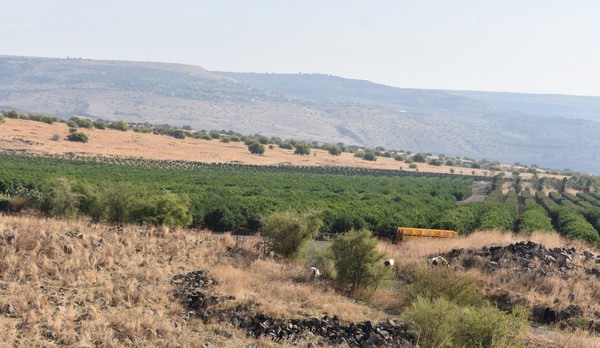
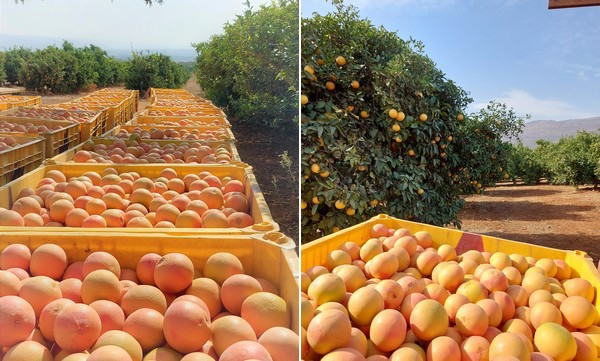
The area where the Red Premium grows
Less Mexican product to Europe
He expects Israeli grapefruit to have a good season. "South Africa stopped a little earlier than usual. When we started, the European market was very receptive. We've since shipped some product to the Far East, and later we'll also load containers for North America. Florida - so colleagues tell us - will have less fruit, partly because of hurricane damage. Mexico, also a producer of some importance, will thus ship more product to the U.S. market. Plus, Mexico faces sky-high logistics costs for shipments to Europe. That opens up prospects for good European demand for the Israeli product."
Neither can Turkey be considered true competition for Israel, explains Knop. "It doesn’t fish in the same pond. With decent quality and low-cost product, it certainly has a solid customer base. But those wanting better than that soon end up in Israel. And they find the truly exceptional quality offered by Red Premium. Israeli grapefruit has been doing well for 70 years, a solid foundation on which to build the market for Red Premium. All those who've bought our product in the past two years will remain clients. And even though the general grapefruit market's been very tough these last few years, we're easily staying afloat."
Everything depends on good grower relations
Four major packaging facilities in northern Israel own Galilee Export. The company sources the avocados, mangoes, and citrus it markets abroad from selected growers who deliver quality products. It also offers its services to growers throughout Israel for processing, packaging, and exporting other products such as dates, bell peppers, and pomegranates. Management strongly believes transparency should form the base of long-term, fruitful relationships with its suppliers. "For example, at the end of the season, we prepare a report for each grower listing the sales figures and the cost breakdown, like logistics and taxes. They get an overview of everything that determines their income," continues Yosi.
Galilee Export, says Yosi, is an attractive option for growers because it has built a broad customer base and solid reputation on the international market based on years of presence with quality products. "Our good name guarantees a strong negotiating position to achieve great prices. Plus, our efficiency is distinctive: even during the pandemic, we could find outlets for all our growers' volumes. And we got the fruit and vegetables to their destinations on time.”
“That's thanks to reliable relationships with multiple logistics parties, whether transport by road, sea, or air. By the way, logistics is our company's largest department. We're very close to it, and if there's the slightest problem, we immediately look for a solution. We attach enormous importance to an aspect that's undoubtedly the biggest challenge for today's fruit and vegetable exports," concludes Yosi.
For more information:
Yosi Knop
Galilee Export
Tel: +972 544 859 446 (Israel)
Email: [email protected]
www.galilee-export.com