One North Carolina-based blueberry grower and shipper is strengthening its growing region in Michigan.
Somerfield Farms is a year-round grower and shipper based in Wilmington, NC and has blueberry farms in Florida, Georgia, North Carolina and Michigan. In December, it formed a partnership with Jawor Brothers Blueberry in Ravenna, MI to add to its domestic blueberry production. In all, this means Somerfield will bring 825 acres of premium Michigan blueberries to the marketplace starting this July.
 The team from Somerfield Farms.
The addition is part of Somerfield’s plan to invest more in its operations by replacing old varieties with more desirable ones and employing precision agricultural methods using data analytics--both of which have shown increases in both volume and the quality of the berries produced, says Somerfield’s Lee Kimball. “Last year we packed more 2-lbs and 24 oz. than anything for premium club store business,” says Eric Jawor at Jawor, who notes that Somerfield Farms proprietary farm and packing facility management software will continue to be employed to drive efficiencies.
Supporting its investment
“We’re spending more money on farming methods to increase quality and yields,” says Kimball. “The commitment to handpicking the entire crop is a major expense when compared to going to machine harvest. However it speaks to our commitment to differentiate ourselves with quality.”
This announcement to strengthen its Michigan production does come at a time when logistics continues to see hefty raises in pricing and climbing fuel costs are making headlines. “Trucks from the Pacific Northwest to the east coast could be as much as 15k, maybe higher,” says Kimball. “As fuel costs continue to rise with no real solution to the problem in the short term, we need to be prepared for what those delivered costs will be. I do sincerely believe Michigan production will help provide lower transportation costs to customers in the central U.S. and Eastern Seaboard.”
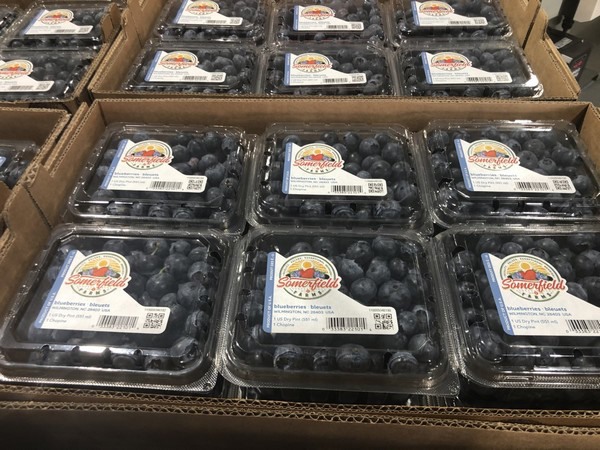 Kimball says Michigan has such a rich history of growing blueberries and a rightful place in the supply chain.
Along with potentially mitigating high freight costs, Michigan production also helps maintain consistent domestic supply. “The geographical proximity to such a large population is an advantage over the competing regions,” Kimball notes. “Michigan has such a rich history of growing blueberries and a rightful place in the supply chain. As demand increases for blueberries each year from consumers, it’s farms like this one that are driving those sales by providing a product consumers want to keep buying.”
It also allows greater domestic competition with Peruvian imports. “We have retailers that will stay with us as long as we can produce the quality needed to meet customer expectations and who wish to support locally grown initiatives. This northern farm extends the window in which we can do that consistently, with newer modern varieties and the dedication to hand picking fruit for maximum shelf-life” says Kimball.
Domestic production begins
Currently on its blueberry production, Kimball says that the Florida season, which starts this month and goes until May, is starting early, but is going to be very light in volume. “It will be a very tight market until we start heavier production in Georgia. The Florida crop is very spread out with more of an extended “plateau” instead of a peak. Even during the “plateau peak weeks” the volume will be less from Florida than last year,” he says.
 Georgia, which historically begins in mid-April and goes until June, is also projected to be earlier this year. However last weekend's freeze could further push back its start date until late April and could even be potentially damaging for the front end of the crop. “And North Carolina has a great crop right now and looks to be slightly early, but will also have experienced that same freeze,” adds Kimball, noting North Carolina’s season goes throughout May and June. New Jersey blueberries also come on in June and go through July.
As for pricing, Kimball anticipates a very strong market through April. “The import quality is very spotty right now and unreliable and there is a substantial difference in the pricing with imports being substantially cheaper,” he says. “As we get into the last week of April and the first month of May, there will be opportunities to promote some larger pack sizes and make room for the higher volumes coming into the market,” he says.
From Michigan, Somerfield will begin shipping pints, 18 oz., 24 oz., 32 oz and 9.8 jumbo sizes in early July and the season should last through September.
 For more information:
Lee Kimball
Somerfield Farms LLC
Tel: +1 (919) 295-4469
[email protected]
http://www.somerfieldfarms.com/