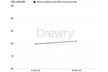
After the previous year’s downturn caused by the corona pandemic, in 2021 the seaborne cargo throughput trend in the Port of Hamburg was more positive than expected. This totalled 128.7 million tons, or nearly two percent more than in the first year of the corona pandemic. At 8.7 million TEU - 20-ft standard containers, container handling was up by 2.2 percent.
Rail freight transport reached a record level in 2021. Last year, the Port of Hamburg Railway handled a transport volume of 48.5 million tons, up by four percent. At 2.79 million TEU, an eight percent advance was achieved for containers. “Hamburg is impressively extending it position as the world’s largest rail port. Despite persistent challenges caused by the pandemic and disrupted transport chains, a new record figure was achieved for environment-friendly freight transport by rail,” said Ingo Egloff, Joint CEO of HHM – Port of Hamburg Marketing.
Rail growth was powered by additional container train services and growing shipments in the medium-distance segment of up to 300 kilometres. Rail’s modal-split share of container transport in Hamburg has meanwhile reached around 51.5 percent. Transfer of freight shipments to rail there has been exemplary. This frees up roads and conserves the environment. At 46.1 percent, trucking’s share is declining. For container transport to and from the Port of Hamburg, inland waterway shipping attained a share of 2.4 percent.
Rapid growth of container shipments along the New Silk Road
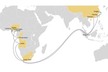
Supplementing sea transport, a constantly growing number of containers are being transported between China and Hamburg by rail. Hamburg is Germany’s leading point of arrival and departure for seaborne container shipments and container train services on the New Silk Road.
“Even if around 20 days are currently needed for rail transport over the 12,000 kilometres between China and Hamburg, the land route via the New Silk Road is faster than a ship by sea. For time-sensitive freight, the container train services therefore provide an attractive alternative for transport between Hamburg and China. Last year, around 160,000 TEU were shifted by rail between Hamburg and more than 25 destinations in China, an impressive 51 percent increase. Various suppliers market a total of more than 290 China train services to and from Hamburg,” explained Axel Mattern, HHM’s Joint CEO.
Prospects for 2022
"The war in Ukraine will have an impact on the throughput development of the Port of Hamburg. However, it is not yet possible to say to what extent the sanctions imposed on Russia will influence cargo handling. A realistic forecast for the current year cannot be made at this point in time because the pandemic could also continue to have an impact on global trade," says Mattern. For 2022, the Port of Hamburg's marketing organisation hopes for an overall stable trend in seaborne cargo handling.
Click here to read the full press release.
For more information:
Bengt van Beuningen
Hafen Hamburg
Tel: +49 40 37709 102
[email protected]