 "We can consider the results of the watermelon campaign to be positive, although the year was extremely difficult for the entire sector. We had high expectations for this campaign, but the difficulties encountered were many, starting with the adverse weather conditions, followed by overproduction and crises in the sourcing of packaging material and transport, which led to a significant increase in costs," said Matteo Testa, sales director of the San Lidano Group, based in Sezze (Latina).
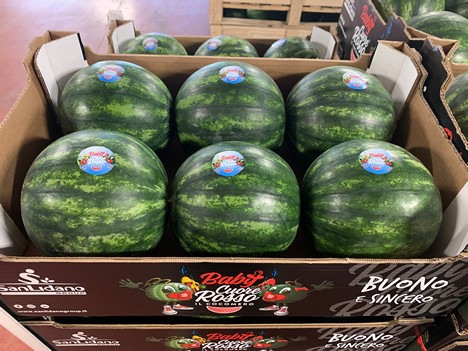
"In the end, we came out of it more than fairly well, thanks to the acquisition of new customers, to the economies of scale that guarantee us high volumes, to the new processing plant (extended to almost 10,000 m²), which has allowed us to optimize our work, and to a number of other measures resulting from our long experience of working with Italian retailers."
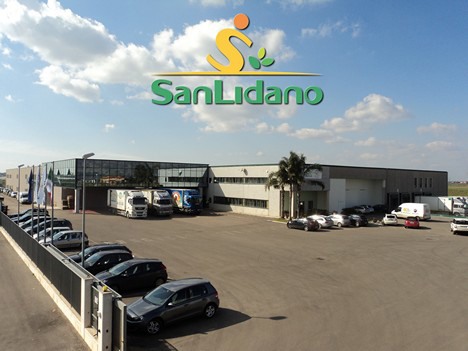
The producers' organization O.P. San Lidano, under the leadership of President Luciano Di Pastina, has expanded from its location based in Sezze, in the province of Latina, to extend its corporate base by adding cultivated areas throughout the Agro Pontino and the Fucino plain. The product is delivered to the various packaging and processing plants available to the Group, including one in the Bergamo area. The San Lidano Group is specialized in the production of fresh-cut vegetables. San Lidano produces and markets more than 50,000 tons of watermelons, available in traditional and seedless varieties.
"Although it has not been an exciting season for these references, the one that is drawing to a close should in any case and without doubt be considered a year of further growth for the San Lidano Group. The beginning of this campaign was marked by a lacklustre trading, due to the climate characterized by mild temperatures, which did not encourage consumption; this persisted until the end of June. In the following months, the abundance of product on the market - both for the traditional product and for seedless crops - generated quotations that were not particularly satisfactory, despite the arrival of the much-awaited summer heat," continued the sales manager.

This year's watermelon campaign was characterized by two problems, namely the difficulties experienced by carton manufacturers and a lack of foreign demand.
"A challenging and persistent work of planning and sourcing of supplies, in order to ensure an adequate supply of cardboard packaging (bins in particular) has marked especially the second half of the season, as a result of the shortage of raw materials endured by all cardboard manufacturers (both domestic and foreign) caused by the strong demand from China, which is sufficient enough to absorb most of the world availability. There were difficulties also regarding pallets, which are in great demand, with consequences on delivery times and prices. Fortunately, having invested over the years in a large stock of returnable plastic bins, which several of our customers appreciate, has enabled us to cope with this inconvenience," said the manager.
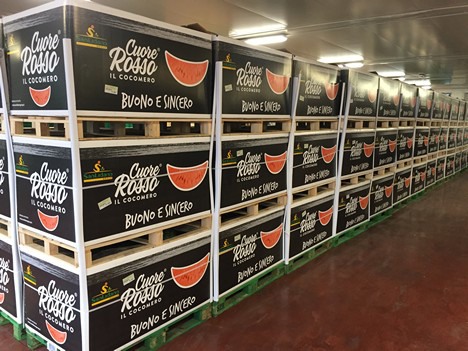
"Another problem was that foreign countries have never been in a race to hoard product. At the beginning of the season, Spain, which has earlier production than us, was faced with a slowdown in demand, with its own producers even forced to destroy the product in the fields. When our own crops ripened, we were faced with a saturated market, given the concentration of aggressive competitors on the continental front".
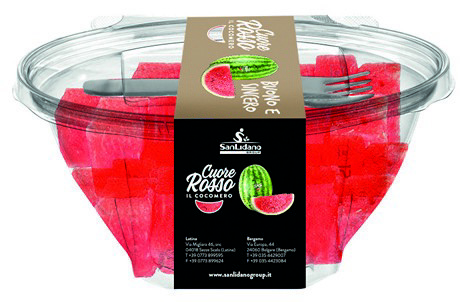
Which watermelons are most popular? "If we were to analyze consumption trends from one year to the next,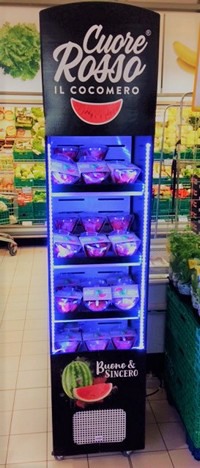 we could certainly say that the preference for midi watermelons (3 - 5 kg) with micro-seeds is growing strongly. However, looking at the overall numbers, traditional watermelons still dominate the global market. Our selection of traditional watermelon is 100% Dumara (oblong type), which is in line with what is traditionally offered in our reference production area, i.e., southern Lazio. For supermarkets, however, it is the size that is more important than the type (oblong or round). The most popular size is 8-10 kg, with a tendency towards slightly larger sizes in southern Italy and smaller sizes in the north of Italy," replied Testa.
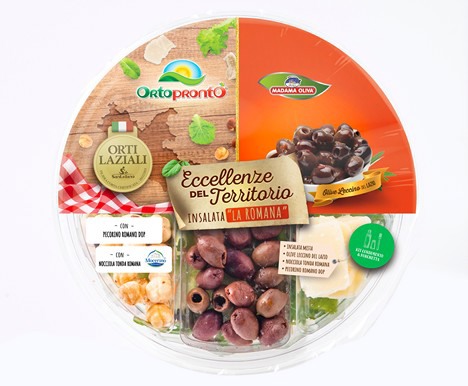
As far as fresh-cut vegetables are concerned, the sector is recovering strongly after the lockdown. It is now returning to pre-pandemic levels and San Lidano continues to sign agreements with new brands in the large-scale retail trade and elsewhere, which guarantee excellent growth performance year on year.
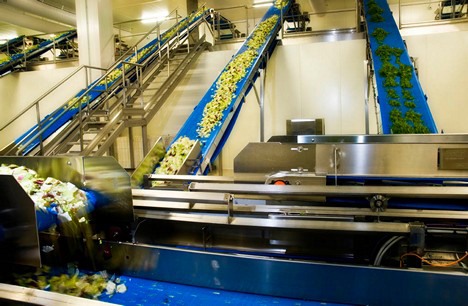
San Lidano is the first fresh-cut company certified with the prestigious Global Standard ETRS - Ethical Trade and Responsible Sourcing, from the British Retail Consortium (BRC). ETRS "the first global regulation that provides consumers guarantees and the protection of workers"; it is indeed an extremely rigorous system to certify a safe and careful management model for workers, which includes the entire supply chain, including farms.
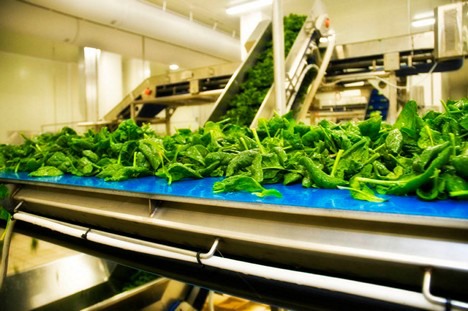
"In the future we want to become more competitive and better equipped for exports, especially after the building of the new plant in the province of Bergamo in 2022 for the processing of fresh-cut products.
Cooperativa San Lidano has concretely solidified its commitment to sustainability on the Social Responsibility front, promoted with the publication of its Quality, Ethics and Sustainability Policy, which led to the drafting of the company's new Code of Ethics, increasing the Cooperative's legality rating.
San Lidano also applies its Quality, Ethics and Sustainability Policy to its 70 members and suppliers, who account for over 120 farms, through the signing of specific Supply Chain Agreements and the application of the San Lidano Regulations, which include commitments to safe, environmentally friendly and socially responsible farming. Other steps will follow, with the aim of an ever closer partnership with customers and consumers, in line with the goals of the 'Farm-to-Fork' and the 'Green Deal'.
For more information: 
San Lidano Soc. Coop. Agricola
Via Migliara 46
04018 Sezze Scalo (LT)-Italy
+39 0773 899595
+39 0773 899624
[email protected]
www.sanlidano.it