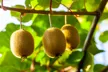
Kakis are one of the flagship products of the season, but fans have certainly wondered: what is the difference between a kaki and a Persimmon?
The difference is actually rather simple: while the word kaki refers to the tropical fruit, Persimmon is a trademark registered by the PDO Ribera del Xúquer, the largest producing area of this fruit in Spain, located in the north of Valencia.
Ripening point
As explained by Rafael Perucho, manager of the PDO, they are both the same fruit and the same variety (Rojo Brillante). It is simply harvested and consumed at different ripening stages. “In our area, kakis have been traditionally consumed in their overripe form," says Perucho, "with a jelly-like consistency and red color. In order to distinguish those from firm-fleshed kakis, the registered trademark Persimmon was introduced.”
The Rojo Brillante variety is astringent, which means that it contains high levels of tannins. These tannins are lost when the fruit becomes too ripe, and that is why it had always been consumed like this, with its characteristic jelly-like texture.
The ripening
According to the spokesperson of this Denomination of Origin, in the 90's, research went into trying to eliminate this astringency without having to let the fruit ripen, thus obtaining a firmer and easier to market fruit. He says that the success was such that 99% of its production today corresponds to this Persimmon modality.
The process to obtain it is also no secret and is explained on the official website of this PDO. Kakis are harvested without allowing them to ripen too much and the astringency is eliminated by keeping them in an oxygen-free environment.
Source: 20minutos.es