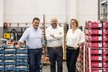
Frubana has extended its business model for restaurants and farmers, adding its presence in cities in Colombia, Mexico, and Brazil, such as Bogota, Barranquilla, Mexico City, and Sao Paulo. Next year the company plans to expand its activity to seven other cities in those markets; in Colombia it will enter Medellin and Cali; In Brazil, the expansion includes the cities of Rio de Janeiro, Curitiba, and Belo Horizonte, and in Mexico, the goal is to serve Monterrey and Guadalajara, stated Fabian Gomez, the CEO of Frubana.
At the same time, Frubana wants to take advantage of its technological capacity to enter other categories that it considers interesting to increase its business. "In addition to selling fruits and vegetables, at the end of this year we will also include protein and groceries in our offer," said the businessman.
Another plan that the company is working on is the assembly of collection centers in rural areas to buy more products directly from producers.
Frubana is supporting this growth backed by its investors. YCombinator and Monashees, which have promoted this type of venture in Latin America and in the world, are some of the investors backing the company.
Frubana has an application to sell to restaurants, technology in the logistics sector to predict demand and contact producers. Fruits and vegetables arrive mainly from the Coffee Axis, Cundinamarca, and Boyaca. In these last two regions, there is a dynamic supply of tomato, onion, and potato. They serve a total of 5,000 restaurants, 2,000 of which are in Brazil and Mexico.
Market dynamics
"Not everything that is produced will necessarily be consumed. That causes some products to be left over and prices for farmers to fall. Sometimes, some producers may be scarce and prices rise in the cities. In the long term, Frubana wants the food in Latin America to be cheaper and farmers to have better incomes," Gomez said.
The platform generates a record of the purchases made by customers, which helps them know their real costs, project into the future and identify consumer behaviors, says Frubana. It also ensures that nothing goes to waste, as keeping a record of the details of the orders lets them know the needs of the establishments.
This year, Frubana has plans to close the year with 20 million dollars in sales. 60% -70% corresponds to sales in Bogota and Barranquilla, while the other countries contribute the rest.
The specialized software allows reducing shipping costs through an intelligent routing system. At the same time, being a supplier of fruits and vegetables that connects producers with restaurants, generates additional savings, as it closes the price gap of those who buy directly in the square.
Source: portafolio.co