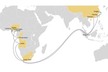
A delegation of Peruvian export companies visited the facilities of the Port of Algeciras last Thursday and participated in a seminar on trends in the food sector in the European market, followed by a networking session with a group of logistics companies operating in the Port of Algeciras. The initiative, organised by the Port Authority of the Bay of Algeciras (APBA) and the Andalusian Technological Corporation (CTA), has also had the support of Extenda, the Association of Agricultural Producers of Peru (AGAP) as well as PROMPERÚ, the National Agency for the Promotion of Peruvian Products.
In addition to the APBA, the heads of the participating companies paid a visit to APMT Algeciras, Agromerchants and the PIF.
Second port of entry to Europe
Peruvian fruit and vegetable exports to Europe are growing at a rate of 20% per year. The Port of Algeciras is the second main port of entry in the continent for Peruvian perishable products, only behind Rotterdam. The route Puerto de Callao-Algeciras connects the two countries in just 20 days and is complemented by another 19 regular services. Consequently, the volume of Peruvian products arriving via Algeciras terminals has grown by more than 40% so far this year.
As explained by the executive director of AGAP, Gabriel Amaro, Peru is currently the world's leading exporter of fresh asparagus, among other products. They export fruits and vegetables, mainly mangoes, avocados, bananas, grapes, blueberries, citrus fruits and pomegranates, to more than 90 countries. According to their forecasts, these exports will double by 2021.
Source: empresaexterior.com