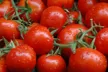
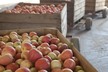
For decades, Red Delicious represented the definition of an of apple. Kids across the United States got them in their lunch bags, and they were ubiquitous on store shelves. But with the explosion in more tasty apple varieties — like Gala, Fuji and Honeycrisp — the Red Delicious has largely fallen out of favor in the US.
Not so in China, though — Red Delicious are huge there. And that’s a big consideration for Washington state growers. One such grower, Michael J. Scott has been planting apple trees in Wenatchee, Washington since the late 1960s. He used to grow Red Delicious. No longer.
There are still many compelling reasons to stick with Red Delicious, including a big one: China. David Smith, a Shanghai-based fruit importer with SVA Fruits, says apples from Washington are a special gift in China, and not for their taste.
“[The color] red in China for hundreds and hundreds, if not thousands, of years has been an extraordinarily important color. It symbolizes luck, it symbolizes wealth, it symbolizes happiness. It carries all of these cultural meanings along with it. And so red fruits do very, very well,” says Smith.
Smith, who is originally from Washington state, says try as they might, Chinese farmers can’t grow Red Delicious apples like they do in Washington state. The Chinese ones just don’t look quite right.
But Smith admits the Washington Red Delicious is slipping in popularity.
“While Chinese consumers still love the red color, they are becoming more and more knowledgeable about the flavor of the fruits. Whereas five, six, seven years ago, when I first started in the fruit business here, people were still buying 95 percent with their eyes,” says Smith. “But in the past few years, we’re starting to see people say, ‘OK, does it look good, and does it taste good?’”