Chokepoints in supply chain threaten global food security
Analysts at Chatham House, the U.K.-based think tank, released a report Tuesday identifying 14 critical junctures, or “chokepoints,” through which large volumes of global food trade pass that could be vulnerable to major disruption if they are not properly maintained—an issue that could adversely affect global food supply and prices. The report found that the weak and aging infrastructure of these chokepoints are not equipped to cope with natural disasters, which could occur with more frequency as the planet warms.
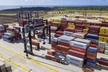
“Three principal kinds of chokepoint are critical to global food security: maritime straits along shipping lanes; coastal infrastructure in major crop-exporting regions; and inland transport infrastructure in major exporting regions,” the report reads, adding: “A serious interruption at one or more of these chokepoints could conceivably lead to supply shortfalls and price spikes, with systemic consequences that could reach beyond food markets.”
The most important of these chokepoints are in the U.S., Brazil, and the Black Sea, which account for more than half of the world’s staple crop exports such as wheat, rice, maize, and soybean. A third of grain imports for the Middle East and North Africa, which is considered the most food import-dependent region in the world, rely on a single chokepoint.
Read more at theatlantic.com