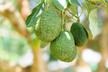
In 2015, Mexico produced 1,600,000 tonnes of avocados, which means the country is the world's largest producer of this fruit, accounting for almost half of the global production. It is also the number one exporter, with 46% of the world trade, followed by Chile and Peru, which have a 9% and 8% share, respectively, as revealed by data from the Secretariat of Agriculture, Livestock, Rural Development, Fisheries and Food (SAGARPA).
In addition to the economic importance of avocados, Mexico is also one of the countries with the widest product diversity, since it has been possible to identify about 20 different varieties and three breeds: Mexican (Persea americana var. Drymifolia), West Indian (Persea americana var. Americana) and Guatemalan (Persea americana var. Guatemalensis).
"This tells us about the importance of avocados as a species and the need to preserve its diversity," stated Dr Alejandro Barrientos Priego, a specialist in fruit trees, particularly avocados, and research professor of the Postgraduate Program in Horticulture of the Department of Plant Science at the Autonomous University of Chapingo (UACh).
He pointed out that given the great genotypical variability of avocados, since there are different sizes, flavours, shell thicknesses, etc., there are many possibilities when it comes to the fruit's genetic improvement.
Barrientos Priego has experience in the genetic characterization of different crops. He is the chairman of the Technical Committee of the International Union for the Protection of New Plant Varieties (UPOV), the entity that sets the morphological and molecular criteria to be applied in order for a variety to be registered at an international level.
The avocado (Persea americana) is a tree with edible fruit that belongs to the Lauraceae family, one of the oldest among flowering plants. It belongs to the genus Persea. In natural conditions, it grows in the fog forests, in the mesophilic mountain forest and extends to the hot zone of the tropics. Within the Lauraceae family, it is the most important species from an economic point of view.
With the aim of delimiting the genus Persea, it has been divided into two subgenera: Persea and Eriodaphne, with the latter being the one with the greatest number of species, about 90, known as aguacatillos. These are rather small and are not compatible vegetatively or gametically with the subgenus Persea, with the exception of the species Persea longipes.
In spite of its genetic diversity, this species is threatened by different factors, including felling, forest fires, changes in land use and livestock. There is currently another major threat to avocado cultivation in Mexico: the Redbay ambrosia beetle (Xyleborus glabratus), which arrived in Georgia, United States, on a shipment from Asia, in the wood of the stevedores. This insect is associated with a fungus known as Raffaellea lauricola, which causes the trees to dry.
Genetic improvement
"Given this situation, in 2009, the Association of Producers and Packers Exporters of Avocados of Mexico (APEAM) commissioned us, together with other researchers, to visit Florida in order to observe how this disease had spread and to learn about the research that was being carried out in that state and at the United States Department of Agriculture. In that year, we learned that the Redbay ambrosia beetle was already attacking the avocados in Florida, while before it only affected wild species, such as the Persea borbonia and others. What the X. glabratus does is to completely dry and wilt the tree in a matter of days, so it is considered a threat."
The prediction that was made that year, when this disease, associated with the beetle, was detected, was that it would arrive in Texas by 2035; however, it had already arrived last year, so its entry into Mexico is imminent. "A little further and it would reach Tamaulipas and expand to the whole country. So far, no source of resistance has been found in the avocados they have in Florida's collection; in fact, they have already moved their collection to Hawaii for security reasons, as that is where they have their germ plasm bank."
Because of this and other threats to diversity, in this case that of avocados, Dr Alejandro Barrientos considered it essential to invest in research and genetic improvement, as only these could help find solutions to problems as serious as this.
He commented that he is currently participating in a project called "Technological platform for the genetic improvement of avocados", which focuses on the identification of associated molecular markers or genes that contribute to the size of the tree, the rooting properties of the rootstocks, the quality of the fruit's oil or the avocados' water use efficiency.
This technological platform has been designed to bring together the development of genomic tools and the identification and characterization of specimens and varieties that can serve as a starting point to develop a new avocado genetic improvement program, with both medium and long term approaches.
The institutions involved in this project are: the Centre for Research and Advanced Studies of the National Polytechnic Institute-Irapuato Unit (Cinvestav), the Chapingo Autonomous University (UACh), the Autonomous University of Nuevo León (UANL), the Postgraduate College (Colpos) and the Michoacan University of San Nicolás Hidalgo (UMSH).
Together with Dr Luis Herrera Estrella and in partnership with the mentioned institutions, the Mexican avocado genome was sequenced, thus making it possible to identify the genes responsible for the synthesis of fatty acids and of gibberellins, related to the size of the trees. "Also important is the finding that revealed that the Hass variety, the most cultivated in the country, shares 64% of its genome with the Mexican breed, when this percentage had been thought to range between 10% and 15%."
He stressed that genetic improvement can certainly be used for the industry, but also to improve other attributes, such as disease resistance, growth habits, and so on. Genetic improvement is also possible for rootstocks, to tackle biotic and abiotic stress or changes in growth habits, and with cloning techniques, it can be used on rootstocks and introduce precocity for the start of the flowering, pointed out the researcher.
Germplasm banks
Given the threats already described, efforts have been made since the 1950's to set up and maintain germplasm banks, not all of which have been successful, since ex situ avocado preservation has faced phytosanitary issues, technical problems in some cases, and lack of interest, all of which have resulted in the loss of accessions (plant population that was collected from a specific place to be preserved in a germplasm bank in ex situ condition. As soon as it enters the germplasm bank, it is called accession and is assigned a number subsequent to the corresponding species).
These efforts were then directed at intensifying the germplasm collections in the 1970's, and since the late 1980's, it has been collected in Chiapas, Veracruz, Tlaxcala, Michoacan and other states of the Republic.
Dr Alejandro Barrientos Priego mentioned that there is a need for coordinated efforts and investments to protect the avocado diversity, since in vivo collections in germplasm banks are expensive.
Source: Academia Mexicana de Ciencias