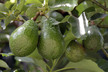
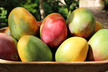
The avocado harvest is quite peculiar. Once the fruit ripens, it can remain for six months in the tree and be harvested whenever it is most convenient. For Spanish crops, this happens between December and May, although the fruit will be "exquisite" from February, according to Enrique Colilles, manager of the agrarian transformation society Trops, leader in the production and marketing of Spanish avocados and mangoes. 90% of its raw material is intended for the European market, which is the most demanding. The cooperative, which brings together 2,300 growers, is based in Vélez-Málaga, the heart of La Axarquía; a Malaga region bordering the neighbouring coast of Granada, where most tropical plantations are located.
The avocado production amounts to 50 million kilos per year and Trops accounts for approximately 35%: between 15,000 and 18,000 tonnes. The sector has a turnover of around 200 million Euro and generates 13,000 direct jobs all year round. The leadership of the cooperative is even stronger in the mango sector, with 8 million kilos out of a total of between 16 and 20 million harvested per year. The fruits are fashionable and demand is greater than the supply.
The product is practically sold before it is harvested and customers are very loyal. Colilles also predicts that mangoes will grow "considerably." The cooperative has prepared 1,000 hectares for the planting of new crops that could double the yield in a few years.
Exporting vocation
Trops exports to 25 countries, mainly in Europe, where the consumption of tropical crops is growing by a steady 20%. Mexico is the world's leading producer of avocados and mangoes, which are also grown in countries such as Peru, Chile or Israel, but the Spanish fruit remains competitive thanks to its closeness to the final destination and the advantage of being harvested ripe. When shipped from South America, the product needs three weeks to reach the European continent, and this makes them lose competitiveness in this market. "That's why our fruit reaches between 15% and 20% higher prices," stresses the manager of the cooperative, which was founded in 1979 with five producers and which now invoices 70 million Euro. Each year, they receive more than 5,000 tourists interested in learning about the sector.
The United Kingdom is buying 20% of Trops' avocados, the same percentage as France. The company is closely following the possible consequences of Brexit, although Colilles is not too concerned. He believes that if the pound continues to fall, it may affect prices, but the demand is so high that it would not fall to the point of not absorbing the supply. The other point of interest is the arrival of Donald Trump to the White House and his commercial policies with Mexico. This country exports 700 million kilos of avocados to the US, which has a consumption of 1 billion kilos. Colilles recalls that Mexican fruit traders are North American and believes that the future president will not make those exports more difficult.
Mangoes are the most profitable open field crop there is (only surpassed by Almeria's intensive agriculture). The profit per kilo amounts to around 50 cents. That of avocados reaches up to 1 Euro, but the production is three times smaller, about 6,000 kilos per hectare, compared to the 18,000 kilos of mangoes yielded by the same acreage. Most Trops partners are small producers (there are also some from the Region of Valencia and the Portuguese Algarve) with between two and three hectares and only 10% of the harvest is concentrated on large farms.
The cooperative has 150 workers, 90% permanent, including biologists, engineers or economists. There are up to 300 types of containers for the fruit's packaging. The avocado demanded by the market is the rough Hass. The most popular mango variety is the Osteen, although Trops exports 300 tonnes of the exquisite Kent, almost entirely to Paris. These are sold for about 4 Euro a piece. It is the subtropical climate, with minimum temperatures that hardly ever fall from six degrees and with maximums of up to 20 degrees in winter, which makes it possible to cultivate these delicacies in the coasts of Granada and Malaga.
Source: elpais.com