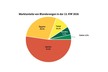
The British retailer Waitrose is a relatively small player, with a market share of 5.5 percent. The store attracts a particular type of consumer, different from the average supermarket client. This is reflected in the kind of products placed in their shopping basket. During the Global Berry Congress, David Northcroft, of Waitrose, gave us a look behind the scenes of the retailer.
"Taste is an essential quality," stressed David. "And in the berry sector, flavour is especially important. We cannot afford to disappoint the consumer in that aspect." The British supermarket attracts an audience that buys raspberries and blueberries more often than the average for the UK retail. The organic segment is also showing signs of growth.

David Northcroft of Waitrose: "We cannot afford to disappoint the consumer."
Click here to see the photo report.
While the British soft fruit market has an average market share of 10.3 percent, at Waitrose, the share of blueberries, raspberries and blackberries is higher. Blueberries have a market share of 12.1 percent, raspberries reach 13 percent and blackberries 11.3 percent. Strawberries have a lower average market share and stand at 8 percent.
Nutritional value
With the ever increasing focus on health and healthy eating, David sees good opportunities for the sector. The average volume of vegetables consumed by British people does not come close to the recommended daily amount. He also sees another trend. "Because there are more elderly people, consumption is falling, as on average, they don't eat as much as younger people," explains David. "Therefore, we must look for new varieties with a higher nutritional value." This trend can already be observed in the citrus sector, with blood oranges with a much higher nutritional value. "Is this something we can also do in the soft fruit sector?" he wonders.

During the breaks, people had the chance to network with others. Click here to see the photoreport.
In any case, the aging population is not the only reason to look for varieties with a higher nutritional value. Also children, who are not always easily convinced to eat fruit, can then consume more fruit with high nutritional properties.
Blackberries
Most blueberries in the UK market are imported from South Africa, Morocco and Spain. Moreover, there is domestic production in England and Scotland. "We are seeing a growth in volumes and the quality is good," states David. For blackberries, the picture is a little different. "In that segment, there is potential for growth, but being able to deliver a consistent quality is difficult," says David. "The short supply during the winter months is another hurdle."
Already published on the Global Berry Congress 2016:
16-3 End of blueberry market growth not yet in sight
17-3 Back to the Future: what awaits the blueberry sector?
22-3 Consumers no longer feel bound by seasons