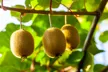
Bad weather, but great optimism at O Baixo Miño. Spain's main kiwi producing region is immersed in the earliest start to the harvest this decade and the outlook is encouraging: production will increase by 20% compared to the average, and if there are no setbacks, it will exceed 4,000 tonnes. "It is usual to start on 10 November, but at that time this year we will be finishing, because we started in late October," said the technician of Kiwi Atlántico, Martín Fernández.
This year's production had been at risk due to the climatic setback in May, which is a key moment to assess how the campaign will go. Storms wiped out 20% of the production in the area. "Yet the harvest will grow by 20% compared to that of the previous year and to the average, which stands at around 3.5 million kilos," affirms Martín Fernández, who also guarantees the fruit will have the right sugar levels. The weather determines the characteristics of each harvest. "The volume is estimated in winter. There were many flowers, because it was very cold, but even after the losses caused by the strong winds, it will be a decent year," states the expert. The dry summer without rain and many hours of sunshine has helped in the development of a "high quality fruit, even though the size of each piece is smaller" and the harvest started earlier. The technician checks each fruit to make sure it has the right balance of sugars.
It was a relatively good year as far as diseases are concerned. "There was a lower impact of the PSA bacteria in May because it did not rain," says Martín Fernández. Fear of the disease itself does affect expansion plans and new plantations. "Setting up a plantation is very expensive, but profitable after ten years, when the investment is amortised, but the fear of PSA adds an element of uncertainty," explains the expert. All that is harvested is sold, because demand is far greater than supply. The growth potential is hampered by a lack of land. "For it to be cost effective and allow a person to make a living, he or she must have at least 5 hectares," he affirms.
Source: lavozdegalicia.es