Sacred citrons mean big business for Israeli farmers
The mystical citron fruit, used by Jews during the Feast of the Tabernacles, continues to captivate the imaginations of those who cultivate it and of Jews around the world seeking "the most beautiful citron."
The citron is a citrus fruit, but contrary to other citrus fruits, it isn't edible when picked off the tree. It constitutes an inseparable part of the Jewish "four species" tradition. During the Feast of the Tabernacles, Jews introduce under the Sukkah (the "hut" constructed for the feast) four plants: citron, a frond from a date palm tree and branches of myrtle and willow trees. They make a blessing over the four and wave them in different directions. Each plant represents a different aspect of the Jewish people.
Kirshenbaum, 55, said “there is fierce competition” among citron growers in Israel, and that once the holidays are over, they will all lay their differences aside and join forces, even if only temporarily, to protest against the import of citrons. “The import is liable to finish us off,” he said. “There, in Morocco, it’s considerably cheaper: Workers come cheap; the land is cheap; water is cheap. And we fear that they [at the Agriculture Ministry] want to flood the country [with citrons].”
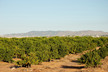
According to Kirshenbaum, he sells annually tens of thousands of citrons, which are grown on a tract of land measuring 70 dunams (just over 17 acres) in the village of Yashresh in central Israel. Half of the harvest is marketed in Israel, while the other half is designed for export to Jewish communities around the world. Some 80% of the exported citrons are shipped to the United States, along with the 250,000 citrons total that Israel exports to the United States each year. There, Kirshenbaum notes, they bar citron imports from Morocco.
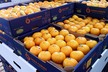
“We carefully examine the boxes intended for export, citron by citron — not just a sample. In Morocco, on the other hand, it isn’t done that way. Throughout the world, they are concerned over contamination by all kinds of pests, but only here in Israel the import of citrons from unregulated and unsupervised sources is approved,” he laments.
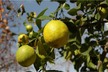
American citron consumers have different requirements. The ultra-Orthodox community will not take anything but “kosher” citrons — that is, green, clean and flawless. Reform Jews, in contrast, prefer large yellow citrons, and deem purchasing a citron grown in the Holy Land a nostalgic and Zionist act.
Like most major fruit growers, Kirshenbaum does not limit his produce to citrons and cultivates other kinds of trees (for instance, tangerines). However, it’s the citrons that provide him during the Sukkot season with practically a whole year’s income. “It isn’t that exceptional and nothing to get excited about; it’s the same way with every farmer,” he says. “Peach growers, too, schedule the fruit cultivation according to the season. The citron season here lasts about three months, which is quite a long period.”
Citron growing has more to it than three months of fruit picking. It is an around-the-clock job, done all through the year. “Each and every citron requires individual treatment. We are going about it branch by branch, tying and pruning,” Kirshenbaum says. “That's why the Agriculture Ministry allows citron growers to employ tenfold the number of Thai labourers, compared to the quota authorized for other citrus growers.”
Though Kirshenbaum is the fifth generation of citron growers, he is considered the first real farmer in his family. “Until I entered the business, other people had been tending the family orchard. My brothers opted for other professions, as they were not interested in agriculture.”
According to Kirshenbaum, the myth of the perfect citron, the pleasing-to-the-eye, flawless fruit, complete with the full nipple, is no more than a legend. “True, there are some extraordinary citrons,” he explains. “However, such citrons by no means constitute the basis of our work. Yet, it should be said that the citron is a fruit of boundless beauty. Any day, you may come across one that looks even better and more beautiful than any citron you have ever seen.”
Source: al-monitor.com