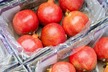
Pomegranates, not oil, star of Iraqi Kurdistan’s rebirth
“There are no pomegranates with the taste and quality of those from Halabja,” said Mr Mohammed.
The pomegranate is seen as something of a national symbol, similar to the olive in Palestine or Lebanon’s cedar trees.
While some experts contend that chemical agents in the soil around Halabja have dissipated, others say more testing needs to be carried out.
“I expect for peace of mind, farmers and vendors would want the soil thoroughly tested as Halabja is synonymous with chemical weapons and it might put people off to buy the pomegranates without hard and fast assurances”, said Hamish de Bretton Gordon, a security consultant and former officer in Britain’s joint chemical, biological, radiological and nuclear regiment.
The semi-arid climate is perfect for the fruit, labelled a “superfood” because of its high vitamin and mineral content, and their success stands as a symbol of Iraqi Kurdistan’s rebirth.
Mr Mohammed and agricultural officials in the area hope to capitalise on this by selling Kurdish pomegranates to a variety of foreign customers.
“We’re producing 25,000 tonnes of pomegranates from Halabja alone, using about 2,000 hectares of farmland,” said Star Mahmoud, who heads the agricultural section at the offices of the Kurdistan Regional Government’s interior ministry.
He said that number far exceeds peak levels of the 1970s, when relative stability in Iraq allowed a bustling trade in Halabja pomegranates with cities as distant as Basra, Mosul and Baghdad.
“It’s a huge increase and there is much potential abroad.”
Residents of other Kurdish cities already travel to Halabja for the fruit. Local farmers are now talking to foreign companies about exporting to the UAE and Britain. But they need financial backing to build storage facilities and organise international transportation.
“The key right now is getting foreign investment,” said Blund Khasraw, director of horticulture at the ministry of agriculture’s office in Halabja.
But the potential is certainly there. Slicing through a fruit he had pulled from a tree on a recent afternoon, Mr Mohammed boasted that any newcomer would be instantly hooked on Halabja’s pomegranates.
“If we’re able to show the world our pomegranates, people will not think of Kurds as an oil-producing people,” said Mr Mohammed, cutting into a freshly-picked pomegranate.
“We will be famous for pomegranates.”
Source: thenational.ae