Indonesia: Tiny wasp tasked with saving Indonesia's cassava crop
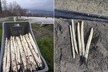
The wasps are being released in Indonesia, the latest country threatened by the mealybug. It's a white fuzzy-looking insect shaped like a pill that's been making its way across Southeast Asia's fields for the past six years.
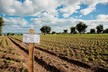
But unlike in Thailand, where infestations reached some 250,000 hectares (618,000 acres) of crops grown mostly as part of the country's huge export business, cassava in Indonesia is a vital food source second only to rice. That makes the mealybug a serious threat to food security in Indonesia, which already has one of the region's highest child malnutrition rates.
The parasitic wasps, or Anagyrus lopezi, need the mealybug to survive. Females lay their eggs inside the insect and as the larvae grow, they eat the bug from the inside out, slowly killing it until there's nothing left but its mummified shell.
On Wednesday, scientists will put 2,000 wasps into a holding cage at an affected field in Bogor, on the outskirts of Indonesia's capital, Jakarta. They will be monitored to see how well they handle local conditions as they multiply to an expected 300,000 over the next month before being released into the wild to start their relentless killing spree.
It's unclear how much damage mealybugs have already caused to Indonesia's crops, but infestations have been reported on the main cassava-growing island of Java and in parts of Sumatra, said Kris Wyckhuys, an entomologist at the Colombia-based International Center for Tropical Agriculture, which is helping to coordinate the release.
He said the idea is to introduce the wasps early in a pre-emptive strike because the pests if left unchecked can destroy more than 80 percent of a harvest by sucking the plant's sap until it withers and dies.
Indonesia is one of the world's top producers of cassava, planting around 1 million hectares (2.5 million acres) a year, half of which is eaten as a staple food across the sprawling archipelago of 240 million people.
Wyckhuys said the wasps have not created any unintended problems within ecosystems since mealybugs only eat cassava and the tiny wasps only eat mealybugs. However, he said it's impossible to erradicate all of the pests because the wasps must keep some hosts alive in order to keep from dying out themselves.
The wasps have vastly improved the problem in Thailand, the worlds's largest cassava exporter, but not eliminated it entirely. Several wasp releases are planned in different parts of Indonesia using insects brought from Thailand.
Source: newser.com