"We had already visited Paesana, which reminded us of our Cordoba, in Spain, the place where we fell in love. In an old farmstead with two hectares of wood we had our turning point, combining our productive land with our idea of 'rural family' of the future."
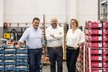
Gisela and her family among blueberry plants.
From a Piedmont community in Buenos Aires (Gisela's grandparents were Italian), through a short stint in the Spanish H&R sector, to a goal made of blueberries, cauliflowers, peas, beehives and clean air - a new start for the family. "I have chosen agriculture because it makes me feel alive. Since the beginning, I felt there was a connection between these lands, which are far away from each other but can be quite similar. I wanted to represent this from the very name of my farm, which became 'L'Argentina' - the name of our origins in our country of adoption."
The perfect representative for all those statistics talking about how one in three commercial farms is led by a woman, Gisela transformed the woods in productive land. "We have thinned down every single metre with a single chainsaw and a lot of DIY, taking advantage of all the land available and using plants that we thought were ideal for the area. We wanted our kids to discover agriculture when once they thought milk came from the bottle in the fridge."
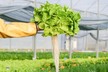
Gisela among cauliflowers.
"I cultivated each single blueberry as if it were one of my children, planting it while it was still just a 'stick' and helping it grow day after day. Because of the type of land and altitude, I was moved when my cauliflowers blossomed. I watched them as if they were huge white roses, I would never have imagined it!"
A difficult conquest, achieved without losing her smile and by attending a professional qualification course, followed by some practice in the local nursery garden and topped by a second big ambition: becoming a "rural woman" in the local community and opting for low environmental impact, ethical-social sustainability and organic produce.
"Starting up a company at a period of crisis did not scare me, because I come from a country where I have learned to live with it since I was born, as it is not something temporary over there. My opportunity is the fact that I grow to sell, cultivating my product according to the market needs. This is how I came into contact with my final interlocutor i.e. the Agrifrutta di Saluzzo e Peveragno cooperative, which welcomed my attempt to become a small loop of a bigger chain!"
Gisela adds that "I am lucky that I am small at a moment of low economic standards, as I am not just 'another one', but 'one more', and I contribute to making a difference. Cooperation makes us stronger, without distorting our dimension or our history. And it gives us the chance to cultivate big dreams, as it happens to me. I look at my 'L' shaped house and I think it could express the multi functionality of agriculture thanks to an agritourism where we could 'dip' our vegetables in bagna cauda (a Piedmontese dish) after having ravioles and tortillas from Argentina."
From a research study conducted this year by INEA, it has emerged that 'female' companies are dealing better with the crisis thanks to the fact that women adapt to and manage change better. The story of Gisele is the perfect example.
Contacts
Azienda agricola "L'ARGENTINA"
Associated to Agrifrutta
Tel. +39 175 240305
Fax +39 175 475821
Email: [email protected]
Email2: [email protected]