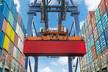
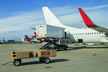
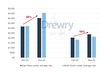
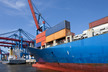
In the last ten years, the air transport of fruit and vegetable products has decreased significantly. Many importers and exporters seem to prefer transport by sea, not only because of the price, but also because of the superior cooling conditions provided by containers and reefer ships. Only for the specialist seeking to stand out, transport by air might be added value.
Cavalier Logistics has been providing the transportation of fresh produce for nigh on thirty years. This is done by truck, boat and plane. In addition to a branch in the Netherlands, the company has offices in the Caribbean. According to Willi Hoogeboom, several developments have marked airfreight in recent times. Some countries out there, he states, still have margins for air shipments, but in most the margins and volumes are very much under pressure. "Especially in Canada and the United States," he says. “But BRIC countries like Russia, India and Brazil, won’t have much to offer either. EU export to Russia poses a problem because of the phytosanitary conditions. India and Brazil tend to produce for themselves. One exception is the niche markets, the markets for specialties and delicacies. I'm talking about the Middle East and the Caribbean."
The Far East is trying to catch up, says Hoogeboom. "Real growth markets for fruits and vegetables are especially China, Hong Kong and Korea. But it is not about tomatoes, peppers and cucumbers, but almost entirely about specialties, such as special types of lettuce, radicchio and samphire. Still, a serious decline of air transport as a whole is almost inevitable."
For Hans Janssen of Logistic Business Partners Rotterdam, the transport of fruit and vegetables by air remains at a stable level. He admits that three years ago a decline occurred, but that recent years have seen a bit of an improvement. "Particularly with regard to mangoes."
This does not mean that Janssen doesn’t agree that container transport has increased. Not just, however, because of better refrigerated containers or techniques. "The increase can be explained by the fact that better varieties have come on the market, so the quality of the fruit is considerably better.” And of course, there’s the matter of volume: “Air transport can never process the quantities shipped by sea,” he says.
Boy Stuijfzand of Best Fresh Group, himself no stranger to imported goods, agrees on the matter of specialties. “There will always be types of food that benefit from air transportation,” he says. “We’ve got beans from Kenya for instance, that simply won’t survive the time it takes a ship to cross the Atlantic. These can only be shipped by air.” Nevertheless, even Stuijfzand thinks reefer ships are the future. "Even more than is already the case. Air will only be used for additional parcels and very small shipments. The price difference is just too big."