US (FL): Funding advances battle against greening
A $9 million allocation from the US Department of Agriculture will be targeted at intermediate research projects. An $8 million commitment from the Florida legislature in the state's 2013-14 budget, which takes effect July 1, will be aimed at short-term research.
The funding will be administered by the Lake Alfred-based Citrus Research Development Foundation, a nonprofit organization created in 2009 to coordinate and manage the industry's research efforts.
"Citrus greening is an enormous threat to Florida's famed citrus industry," said Agriculture Commissioner Adam H. Putnam, a key advocate of the new funding. "The money for research will help us fight this terrible disease that threatens to destroy the entire $9 billion industry."
The current portfolio of CRDF research efforts includes 140 projects, said chief operating officer Harold Browning.
Among the most important are the development of disease-resistant trees and new therapies that could be used to reduce the symptoms of HLB-infected trees.
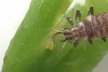
CRDF is working on anti-microbial treatments for trees. Research projects are focused on developing attractants, which would draw the HLB psyllid away from groves and allow them to be killed, or repellents that would help trees resist the disease.
Clewiston-based Southern Gardens Citrus, one of the state's largest growers and vertically-integrated producers of not-from-concentrate orange juice, has pursued its own aggressive research initiative, said president Ricke Kress, who is also a member of the CRDF board. Kress first learned in 2005 that his trees were infected with HLB.
Since then, about 650,000 trees - or 25-28 percent of his groves - have been infected, he said.
While also supporting and working with broader industry-wide efforts, Southern Gardens has created its own private research program. One key focus has been the development of HLB-resistant trees.
"Our projects are moving along," Kress said. "We've had trees in the ground since 2009 that we've been challenging, watching and testing. We continue to improve upon the technology. And we have shown that we have developed resistance to the disease in the lab. But we have to put it out into Mother Nature and make sure it works in the groves."
The reality, Kress said, is that, "the Florida citrus industry will never be what it was. Not that long ago, the Florida crop was 242 million boxes. Now, according to USDA estimates, it's down to 138 million. And not all of that drop is from HLB. It also includes causes such as hurricanes. But the reality is that the industry has undergone a major change. But Florida orange juice is not going away. We are going to make sure it's always here."
Source: 2highlandstoday.com