Mexico is the leading worldwide producer of fresh onion with more than 1.4 million tons per year. However, China is the leading producer of dehydrated onion with a production of 18 million tons per year.
In Mexico, the onion crop is the fifth most important vegetable. In 2011, 47,200 hectares were harvested, with a production of nearly 1.4 million tons. Exports for this year were in the order of 303,500 tons, of which 89% were for the U.S. market, equivalent to 19.5% of national production.
95% of Mexican production is concentrated in Chihuahua, Tamaulipas, Michoacan, Baja California, Guanajuato, Zacatecas, Morelos, Puebla, San Luis Potosi, Jalisco and Sonora, targeting 85% of the fresh produce for domestic consumption, 12% for
processing (seasoned, seasoned, flaked, dried, granulated, chopped or sliced) and 3% left to develop oils.
In seven states, (Tamaulipas, Chihuahua, Zacatecas, Baja California; Michoacan and Guanajuato) 74% of the national production of onion is concentrated, which together account for 70% of the national area planted.
The onion crop is sown in both autumn-winter cycles (AW) and spring-summer (SS) , 80% of area planted is under the irrigation regime and 20% under rain-fed conditions, allowing the fresh supply of this product all year.
However, in the months of March to June, 81% of the AW production is concentrated at 700,000 tons, while 91% of the SS Cycle is close to 600,000 tons, concentrated in the period from August to January. The months of February and July are the lowest in production this year.
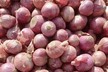
From domestic production, 90% are white onion, 7% purple, and 3% yellow. From production, 88% goes to fresh consumption and 12% for processing (seasoned, seasoned, flaked, dried, granulated, chopped or sliced).
This vegetable is one of the most versatile ingredients of Mexican cuisine, as its flavor seasons salads, sauces, soups, meats and endless preparations. A family of four uses at least one kilogram of onions a week.
Between 2011 and 2012 FIRA, has channelled funding to this chain of around 250 million pesos, corresponding 83% to a working capital loan and 17% fixed asset loan.
Source: Eleconomista