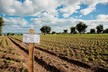
Trinidad and Tobago: First commercial carrot crop promised
The carrots will be used in processing, in school meals and, on a small scale, in the local market to test consumer reactions.
In six weeks the first batch of carrot seeds will be germinated and planted on an acre of land at Chaguaramas, with harvesting expected in July.
The second batch will be put into the ground n November.
The pilot project will be undertaken by Caribbean Chemicals and Agencies Ltd and the Ministry of Food Production, following the signing of a Memorandum of Understanding in April 2010.
It’s a project that Caribbean Chemicals managing director Joe Pires and Food Production Minister Vasant Bharath intend to supervise closely, since this will be the first-ever commercially-viable carrot crop in T&T.
“Bharath has already given us his full blessings,” Pires revealed at his San Juan office on Wednesday. “If the country welcomes our initiatives, we will go all out to put locally-grown food on the table.”
However, Pires said financing was an issue and getting the banks on the board was a challenge that needed to be overcome if the project was to have any chance of success.
Currently the government spends $50 million per year on the import of carrots.
In two weeks’ time, Pires will also test-plant baby corn, used mostly in Chinese dishes. Currently, Pires has several beds of spring onion that are due for harvesting. "
We are not going to compete with local farmers since many of these crops are not locally grown. We are checking to see if we can compete with our imports or can add value."
Source: www.guardian.co.tt