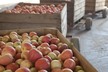
Since last year, many fruit trading companies have been facing additional problems with keeping their products fresh during transport due to logistical obstacles. Around the world, many important ports are struggling with backlogs, and ships are often delayed for days or even weeks. In addition, port operations and custom processes often have days of delay under covid-19.
Some types of fruit with high sugar contents or with poor quality easily spoil during shipment. And when one piece of fruit spoils, it will easily affect other fruits in the box. In addition to that, market demand is weak under covid-19, so many types of fruits experiences slow sales in the market. This not only affects the overall product quality, but also increases the products waste rate, and traders may suffer big loss. All of these developments put additional pressure on traders, and make them pay extra attention to preservation techniques.
Three common preservation methods used during fresh produce logistic, that are produced a lot, or often used in China.
1. 1-Methylcyclopropene (1-MCP)
With 1-MCP, the preservation products inhibit ethylene in the internal and external environment, reduce respiration intensity, and prolong fruits and vegetables’ shelf life. Some 1-MCP preservation methods can extend the shelf life of fresh produce products by 50-200%. 1-MCP is very suitable for fruits and vegetables that are sensitive to ethylene production. There are different versions of the 1-MCP ethylene inhibitor that suit different packaging methods.
In China, there are three kinds of products that are suitable for long-distance transport. The first is a tablet, which is suitable for open packaging inside shipping containers. Treating the entire shipping container is the most economic method of keeping fruits and vegetables fresh. The second is a sachet, which is most suitable for boxes with a lid or preservation bags inside boxes. The third is a preservation card, which also suitable for use in boxes with a lid or preservation bags inside boxes.
The advantage of using 1-MCP is a low cost price and the convenient usage. However, for some sensitive products you have to get the volume and application just right. Moreover, every 1-MCP company needs to have special registration for selling the product in a particular country. This limits some companies in the export of their product.
2. Ethylene absorbent
Ethylene absorbent is a biologically competitive inhibitor of ethylene, which prevents fruits from producing ethylene to ripen themselves. The product is a kind of film preservative, which is mainly used for moisturizing and preventing harmful effects. It also has the capacity to modify the atmosphere in a micro environment.
Ethylene absorbent is very easy to use, and particularly effective with ethylene-sensitive products. However, there is a limit to how much ethylene can be absorbed, and the cost price is rather high.
3. Modified atmosphere package (MA packages)
Modified atmosphere bags allow a change in the concentration of gases inside the containers in a natural way through the interaction between fruit, environment, and container. This natural interaction helps to reduce the respiratory rate of fruits and vegetables.
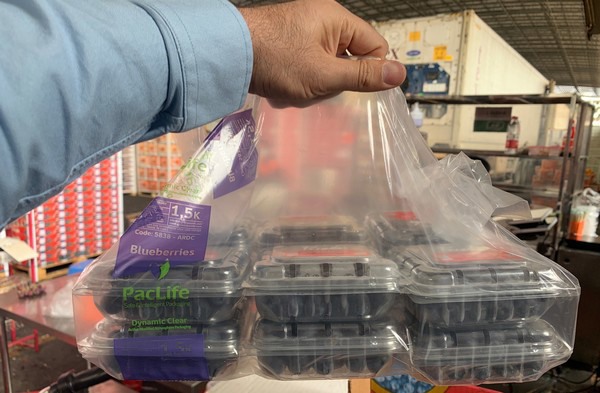
Each type of fruit or vegetable has its own respiratory rate. Even for the same species, respiratory rates of different varieties are not the same. On top of that, objective conditions such as the transportation time and logistic mode can also make a difference in the fruit’s respiratory rate. Each fruit variety thus requires a different packaging strategy. Therefore MA bag producers often have a vast catalog of solutions for different situations, which allows them to provide precise and targeted solutions for customers.
There are many MA packaging providers in the market. Felipe Acosta is the representative of a Chilean MA packaging producer Paclife. “In Paclife we have packages with a volume between 2.5kg-10kg, and several categories for different types of fruit. The most popular type we use in China is a 5kg package for cherries. When the products are stored at proper temperatures, the shelf life of cherries can be extended up to 70 days. According to the standard in the food sector, when exporting MA packages from Chile to China or to Europe, we have to provide relevant certificates.”
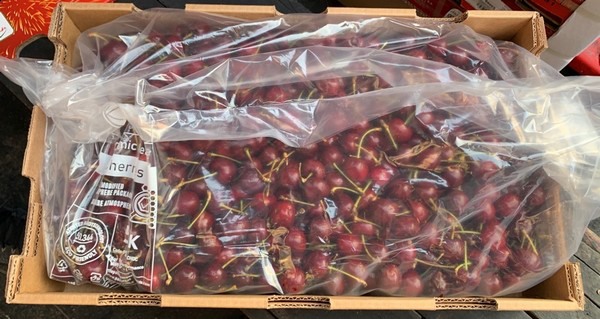
One problem about MA packages is that some of them are not very environmental-friendly, because producers in the food sector are ruled by the standard that only raw material can be used for making food package, but not recycled ones. This means that plastic packages can generate lots of waste. “While many producers in the market are using polyamid, or ethylene as raw material, Paclife is working on the compostable packaging in line with the new eco friendly trend.” Felipe said.