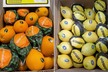
The National Institute of Agricultural Technology (INTA) Concordia, Entre Rios, managed to develop two new varieties of mandarins, Criolla INTA SS and Tardia INTA, which were recently registered in the National Registry of Property of Cultivars (RNPC) of the National Seed Institute (Inase).
"The new mandarin varieties are sanitized using the micrograft technique of stem tips in vitro from the Citrus Varieties Sanitary Improvement Program," stated Miguel Garavello, a researcher at INTA Concordia.
The specialist said that Criolla INTA SS has the same appearance and growth habit as the mother plant that gave rise to it, the Criolla mandarin (Citrus delicious Tenore). “The difference between this variety and other similar varieties is that its fruits have almost no seeds at all; as it has an average of 1.5 seeds in 100 fruits." In addition, it has an outstanding ripening time, while the Common mandarin is ready for mid-season, the Criolla SS is ready for the mid-early season.
La Tardía INTA comes from a selection of nucellar seedlings (which are suitable for eliminating viruses that in many cases are transmitted by the seed of the variety) of Tardivo de Cicadulli. The researcher said that the general characteristics of the plant were similar to the other varieties of its type and that what differentiated it was its ripening period and fruit quality. Garavello said it presented a late maturation (August-October), the fruit had high juice content, no puffiness, and relatively low seed content.
He also confirmed that they had already incorporated them into the Inta Germplasm Bank and assured that they will be included in the Citrus Certification Program as of spring 2021, which will enable their commercialization throughout the national territory.
Source: intainforma.inta.gob.ar