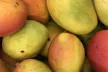
The Rural Development Secretariat of the National Agricultural Health, Safety, and Quality Service (Senasica) has ordered suspending the aerial fumigation to combat pests -such as the fruit fly- in Oaxaca's mango productions to avoid harming other species, such as bees. This measure could put at risk the export of 40,000 tons of Oaxacan mango that some 5,000 producers from the eastern part of the Isthmus of Tehuantepec sell to the United States and Canada each year.
“The United States could close its borders to the mango from Oaxaca if we don't correct the issues that our health campaigns have. We might be quarantined if some mango has a live larva, as not all producers have the money to fumigate on the ground,” stated producer Luis Eduardo de los Santos.
It's a latent risk, the producer warned. According to data from the General Directorate of Plant Health of Senasica, from January 8 to February 2 of this year 6 orchards in the Isthmus area were unauthorized to export to the United States after authorities found live larvae in mangoes among the fruits they sampled.
Power outages and climate change
The increase in the cost of fumigation is not the only challenge facing mango growers in Oaxaca. Every year between December and April, which is the normal harvest and export period, mango producers also suffer from failures and blackouts in the supply of electricity.
In addition, climate change is also impacting fruit production. The temporal sequence of the fruit ripening process in all orchards, even in the same tree, has gone askew. “Since January we're experiencing a problem or phenomenon we hadn't seen before: the flowering started earlier and now the ripening of the fruit in the mango trees is experiencing a temporal anomaly. In some cases, a single tree will have ripe mangoes in some branches while other of its branches are just starting to flower. Perhaps climate change has already caught up with us,” the producers stated.
Source: oaxaca.eluniversal.com.mx