AgriSA and Agbiz have welcomed the government's decision to extend and phase the temporary fuel levy relief measures through May and June 2026. The intervention provides short-term cost relief to farmers and consumers amid continued global oil price volatility.
However, both organisations note that the relief does not fully address the broader structural pressures facing the agricultural sector, including fuel availability constraints, rising input costs, and higher global oil prices linked to the Middle East conflict.
While the levy reduction offers temporary relief, joint surveys of farmers and fuel distributors indicate that concerns remain around fuel pricing, supply reliability, and overall input costs. Reports from the supply chain highlight ongoing disruptions, including delayed deliveries, allocation limits, and reduced supply volumes. Farmers are experiencing partial deliveries or delays during critical operational periods.
 © AgriCulture
These pressures are further compounded by higher fertiliser costs, weaker commodity prices, and uncertain weather conditions, adding strain to farm profitability.
The timing is a concern, as South Africa's winter crop season is underway. Planting is progressing across key production regions, with data indicating a potential 6% decline in wheat plantings for the 2026/27 season, reaching the lowest level in 12 years. This reflects lower global prices, rising input costs, and increased production uncertainty. Fuel constraints and reduced input use could further impact yields and output.
Looking ahead, AgriSA and Agbiz warn that continued fuel supply disruptions and price volatility could pose risks to the 2026/27 summer crop season. This comes despite expectations of a record 20.8 million tons of grains and oilseeds for the 2025/26 season, which supports short-term supply and price stability but does not offset longer-term risks.
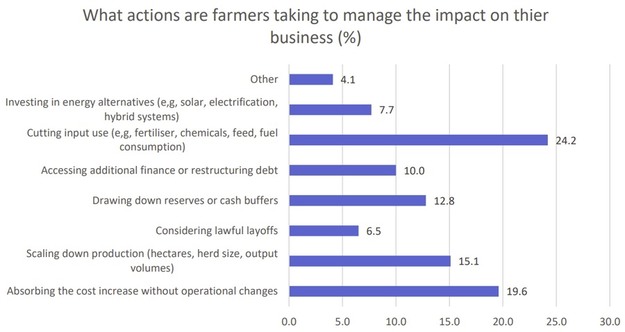
Diesel remains a key input across farming operations, including planting, irrigation, harvesting, and logistics. Supply disruptions and rising prices are already affecting production decisions. Survey data indicate that farmers are scaling down production, reducing input use, drawing on financial reserves, and exploring alternative energy sources.
AgriSA and Agbiz state that stabilising the sector will require a coordinated response addressing both fuel price and supply reliability. This includes ensuring consistent fuel availability in agricultural regions, improving transparency on supply conditions, and addressing logistical challenges in distribution.
The organisations also welcome the ongoing review of the fuel price formula and highlight the need to reflect agricultural production conditions in future policy frameworks.
AgriSA and Agbiz say they will continue working with government and industry stakeholders to support the resilience, productivity, and role of agriculture in food security and economic growth.
 © AgriCultureFor more information:
Theo Boshoff
Agbiz
Tel: +27 76 951 4269
Email: [email protected]
www.agbiz.co.za
 © AgriCultureJolanda Andrag
AgriSA
Tel: +27 82 457 9937
Email: [email protected]
www.agrisa.org.za