75% of patents in gene-edited seeds now belong to China. Ongoing European Union restrictions on the development of NGTs, or New Genomic Techniques, have, in all likelihood, been a decisive factor in how leadership in plant breeding innovation has reversed in less than a decade.
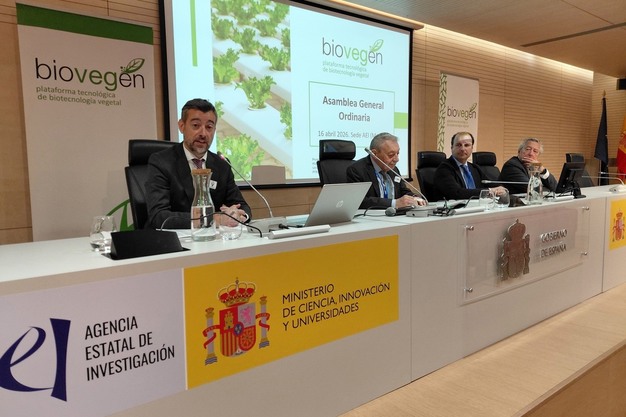
As recently as 2014, the EU led the ranking with 3,464 plant protection filings registered with UPOV, the International Union for the Protection of New Varieties of Plants. China ranked second with 2,125, and the United States third with 1,588. By 2024, the Asian giant had moved to the top with a figure five times higher than Europe's, posting 16,177 filings compared with 3,268 for the EU and 1,268 for the United States. Those figures were presented last week during the general assembly of Biovegen, the science business platform focused on advancing agricultural biotechnology.
Manuel Láinez, director of Fundación Grupo Cajamar, used the event to frame a broader geopolitical shift in the West and pointed to what he described as a more hopeful turn in European strategy. "The post-Ukraine and post-COVID world showed that food chains are vulnerable. Until recently, for Brussels, only energy sovereignty was strategic. Today, it is already clear that food also matters, and plant biotechnology is no longer only a science. It is geostrategy."
 © Biovegen
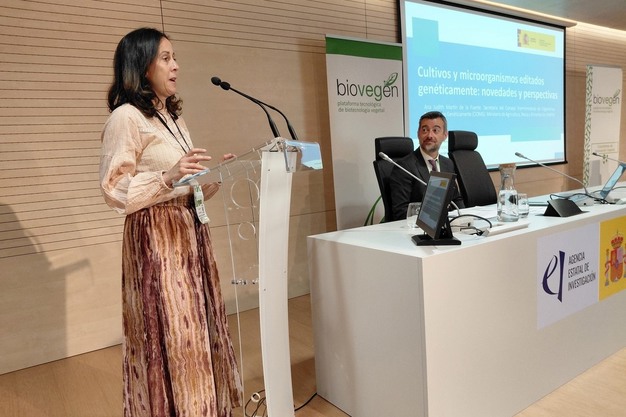
Important steps have been taken place in recent days to turn that shift into policy. On April 21, the Council of Europe adopted its final position on the future NGT regulation. In May, Parliament is expected to approve the text in second reading, meaning the rule could be published in the Official Journal of the European Union during the second half of this year. But as Ana Judith Martín, representative of Spain's Ministry of Agriculture (MAPA) and secretary of the Interministerial Council for Genetically Modified Organisms (CIOMG), explained immediately afterward, regulation for plants improved through methods such as CRISPR will not enter into force until 2028.
Aware of the growing pace of gene editing activity already underway, Martín encouraged the Spanish companies and research centers attending the Biovegen meeting to move ahead of that date and begin preparing registration files now. "MAPA will make it easier for companies to have everything ready so that when the rule enters into force in 2028, they can protect their varieties. Even at the level of field trials, which today, as with everything else, are governed by the transgenic directive, we are quick in granting authorizations, and carrying them out under the current directive does not mean the variety cannot later be registered as NGT 1."
 © Biovegen
Martín used the NGT 1 terminology included in the compromise text agreed by the Council of Europe in December, which effectively closed the slow EU legislative process. She herself played a key role at the start of that process during Spain's EU presidency in 2023 as MAPA's representative. Concepción Novillo, director of Seed and Biotechnology Regulatory Policies at Bayer Crop Science, then outlined the new regulation in greater detail and the stages still to come.
Plants classified as NGT 1 will benefit from greater flexibility and faster processing of protection applications because they will avoid the complex risk assessment procedure required under the current 2001 directive for Genetically Modified Organisms, meaning transgenic plants that introduce foreign DNA into the genome. "Varieties developed through the latest breeding methods should not be regulated differently if they are similar to and indistinguishable from those that could have been obtained through earlier breeding methods," Novillo said.
That principle has guided much of the global regulatory race in gene editing, where Europe has accumulated significant delays. Countries that moved earlier include Argentina, Canada, the United States, Colombia, Ecuador, Brazil, Paraguay, Chile, Uruguay, Peru, Japan, Australia, India, and, in Europe after Brexit, the United Kingdom, as well as African countries such as Nigeria, Ghana, and Kenya.
According to Novillo, those jurisdictions recognized the specific nature of these techniques and created dedicated rules for NGT plants separate from GMO legislation. China, by contrast, classified these plants as transgenic but, in practice, approved a simplified authorization process. Under the EU proposal, gene-edited plants would be divided into NGT 1 and NGT 2 categories. NGT 2 would follow a path inspired by GMO rules, including stricter risk assessment requirements, traceability, and mandatory labeling.
The dividing line between the more flexible NGT 1 category and NGT 2 treatment would depend on a criterion questioned by parts of the scientific community: whether the edited plant contains more than 20 genetic modifications. As part of this broader European shift, additional reforms are already on the horizon that could reactivate agricultural biotechnology.
Revision of the fertilizer regulation is well advanced and would recognize new biofertilizers and bionutrition products. Work is also underway on the Omnibus food simplification package, which would distinguish biostimulants from chemical crop protection products and speed up registration of biopesticides. Changes are also expected in the regulation of plant reproductive material used by nurseries. Martín also highlighted another initiative included in the Omnibus push: the start of reform of the directive covering genetically modified microorganisms, or GMMs, which have also been regulated since 2001 under a framework similar to GMO rules.
In line with the plant editing proposal, the future text, she said, would allow "greater adaptation of information and risk assessment requirements to their specific characteristics, creating a category of 'low risk GMMs' whose authorizations will have indefinite validity and, to avoid legal uncertainty and RASFF alerts generated by the identification of traces, flexible detection methods will be applied."
Pellicer's legacy and a new alliance with horticultural science
Held at the headquarters of Spain's State Research Agency in Madrid, the Biovegen general assembly also served to review the work carried out by José Pellicer during more than two decades as president.
Biovegen director Gonzaga Ruiz de Gauna said: "We were born in 2005 to replicate the structure that France and Germany already had in place to facilitate the transfer of biotechnology to agriculture. At that time, we were 15 companies and 5 research centers. Today Biovegen has 185 members, and the results in project development support Pellicer's track record."
Following that recognition, the assembly confirmed José María Fontán, also linked to the Spanish company Eurosemillas, as the new president of the platform. The assembly also ratified a new alliance between Biovegen and the Spanish Society for Horticultural Sciences (SECH), with the participation of SECH president Francisco José Arenas. The agreement with one of Spain's largest agricultural scientific societies, made up of more than 450 researchers, will support joint conferences, congresses, and events on agricultural biotechnology, wider dissemination of those activities, and the development of research projects in the field.
 For more information:
Biovegen
biovegen.org