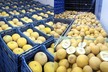
So far, the harvesting of Greek Galia melons has been taking place only in Crete, with producer prices following a downward trend. Specifically, top-quality fruit was priced on April 20 at 2,08 euros per kilogram, only to fall yesterday to 1,20 euros per kilogram, according to local auctions. This development is attributed to the evolving balance between supply and demand, as the pace of harvesting continues to increase and more product becomes available on the market.
 © Samaris S.A.
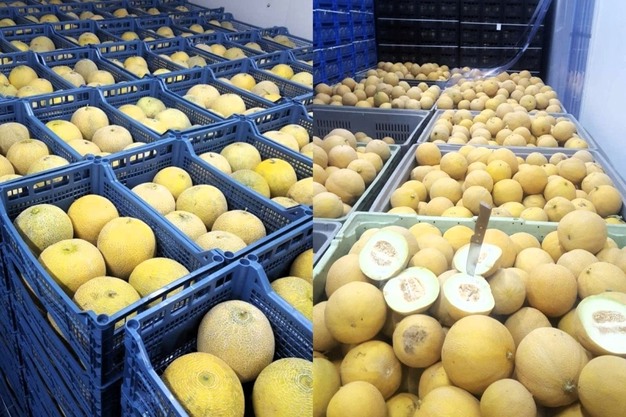
However, beyond Crete, the harvesting of Galia melons is now also beginning in greenhouse units in Ilia, on mainland Greece. "The first small quantities of fruit have started to be harvested and sent to the domestic market in recent days, but from this weekend onward, we will begin harvesting on a daily basis. In our business, this can reach up to 150 tons per hectare per day, and then increase even more. That is when we also expect exports to begin. Our company cooperates with Lidl for supplying its stores in Eastern Europe," notes Mr. Christos Samaris, owner of the local company Samaris S.A.
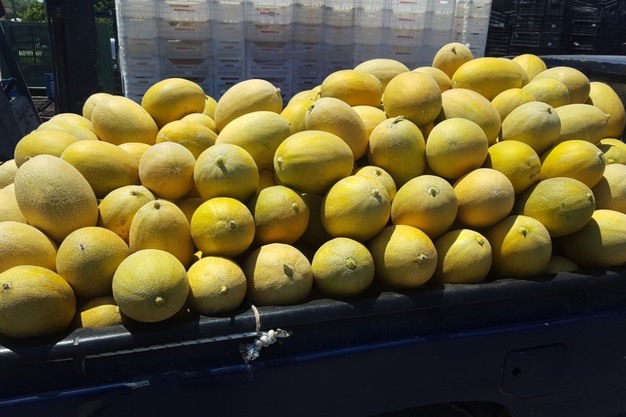
Regarding the developments of this year's cultivation, the Greek entrepreneur explains that the conditions are not optimal: "The early greenhouse-grown melons did not develop a large size due to humidity-related issues, and this is no longer expected to change. However, the later crops, which will start from open-field plantations in July, can achieve larger sizes. The season for greenhouse-grown melons will be completed by mid-June, while at the beginning of the same month, the season for open-field production will commence. Open-field cultivation of melons is more widespread."
 © Samaris S.A.
Finally, Mr. Samaris also expresses concern about the weak financial outcome that the new season may bring. "On the one hand, all production cost factors have significantly increased. Fertilizers by 20% and plant protection products by 33%. At the same time, these first few melons we harvested barely reached 1,50 euros per kilogram, whereas this was the most common price last year for the entire greenhouse period. Obviously, however, this year, from next week onward, as available quantities increase, prices will decline."
For more information:
Christos Samaris
Samaris S.A.
Tel: +30 262 307 1143
Email: [email protected]
https://samaris.gr/en/welcome/