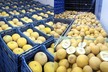
Export pressure, volatile weather, and tightening margins are combining to test Australia's melon sector, with Melons Australia CEO Johnathon Davey warning that some growers are already stepping back from production as uncertainty builds.
"There's no question that export markets are under pressure at the moment," Davey says. "Currency is playing a role, freight is playing a role, and in some markets we're seeing increased competition from lower-cost origins."
 © Ian Andreiev | Dreamstime
That pressure is not uniform. In markets where premium counts, Australian melons still hold an advantage, but elsewhere the gap is narrowing. "In places like the UAE, we remain competitive because of quality, and that's really what keeps us in the game," he says. "But in markets like Japan, where quality is already a baseline expectation, and fruit is graded very tightly on arrival, it becomes much harder to differentiate."
The result is a more complex export landscape, where growers must weigh returns carefully before committing volume. "It entirely depends on the market as to whether those pressures can be absorbed," Davey says. "In some cases, growers are deciding it's just not viable to continue at the prices being offered."
At the same time, weather disruption has added another layer of uncertainty. Heavy rainfall and flooding in key growing regions have delayed planting and, in some cases, prevented it altogether. "We're hearing of growers who simply haven't been able to get onto blocks in time," Davey says. "There are areas where people have made the call not to plant this year because they won't get the crop away in a viable window."
That has raised questions about supply later in the season. While reduced planting could tighten availability, the picture remains unclear. "It's going to be very region-specific," he says. "Some areas will be short, others may still come on strong, and that variability makes it difficult for the market to find a stable footing."
Even where crops have gone in, timing has shifted. "We're seeing delays that could push supply further into the year," Davey says. "That can create opportunities if the market is short, but it can also lead to a glut if everyone comes on at once."
Against that backdrop, growers are grappling with rising costs and uncertain returns, a combination that is beginning to reshape the industry. "There's no doubt that growers are struggling," Davey says. "Input costs, labour, freight, compliance, all of it is increasing, and the returns aren't necessarily keeping pace."
That imbalance is already having consequences. "We've seen a contraction in grower numbers over recent years," he says. "People are making decisions about whether they can continue, and for some, the answer is no."
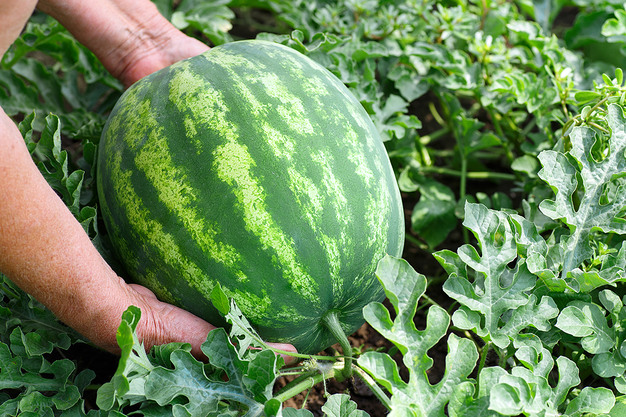 © Oleksii Terpugov | Dreamstime
The long-term concern is what that means for supply and food security. "If growers aren't sustainable, the industry isn't sustainable," Davey says. "You can't expect people to keep producing if they're not making a return."
Despite the challenges, he maintains that Australian melons still have a strong position globally, particularly where quality can command a premium. "We do have a competitive edge in quality, and that's something we need to continue to lean into," he says. "But we have to make sure the economics stack up, otherwise that advantage won't be enough to keep growers in the game."
For more information:
Johnathon Davey
Melons Australia
Tel: +61 407 032 023
[email protected]
https://www.melonsaustralia.org.au