The development of Hass avocado production in Honduras is moving forward against a backdrop of clear market opportunities and structural challenges that remain unresolved. Fernando Villatoro, agronomist and CEO of Fresh Earth Produce, says the company's previous experience in fruit exports is now serving as the foundation for building a new industry.
Villatoro links the origin of the project directly to his background in melons and opening markets in Asia. "All of this comes from understanding transit times, postharvest, and how to open complex markets. We managed to load the first containers from Honduras to Dubai with 35 days in transit, and they arrived in perfect condition. We are now applying that to avocados."
 © Fresh Earth Produce
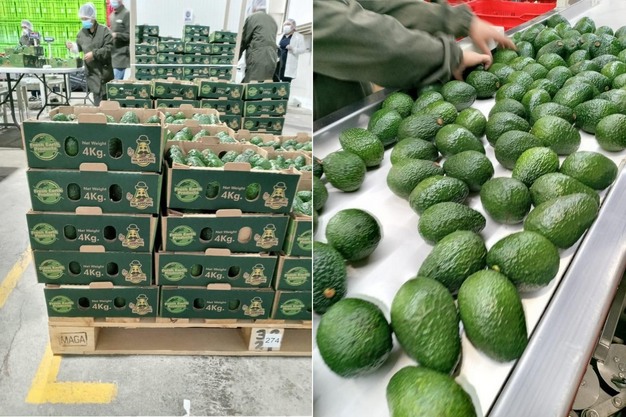
From that base, interest in Hass avocado in Central America gained momentum around 2020, although early production limitations slowed progress. Guatemala moved first, supported by coffee-growing areas, while Honduras fell behind mainly because it lacked complete phytosanitary protocols. Interest in the crop has intensified in recent years, especially after the coffee crisis in some highland regions. "Where there is coffee, there can be avocado. And where both exist, there is hope."
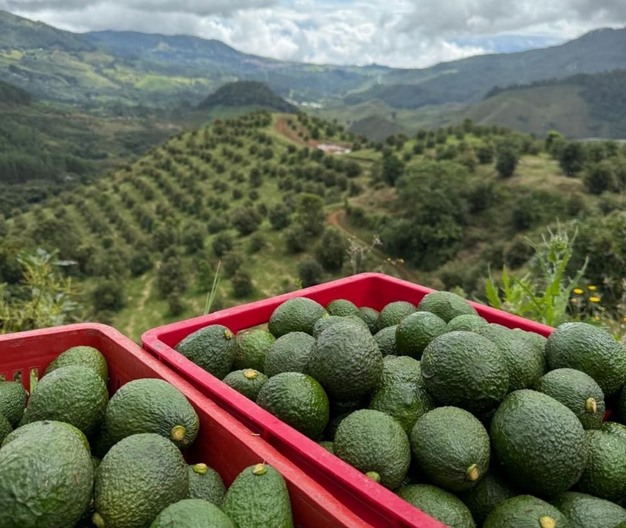
Honduras has still not positioned itself as a significant exporter. Although the country has around 1,100 planted hectares, most orchards show technical shortcomings. "90% is poorly managed. It is not a productive capacity issue; it is an agronomic management and residue compliance issue.
 © Fresh Earth Produce
One of the main bottlenecks remains market access. "The process with the United States has remained unfinished since 2022, while Guatemala already secured access in 2024. We have not completed the opening of the U.S. market, and that delays everything else, even Japan," Villatoro says.
Alongside the United States, Japan stands out as another strategic market. The team's previous experience opening the Japanese market for melons, through technical protocols and phytosanitary validation, offers a roadmap that can be repeated. "We already did the technical work with Japan in the past. That path has already been traveled." In this case, the goal is to move forward again with institutional backing and international cooperation, relying on postharvest technologies and atmosphere control systems that can meet the demanding requirements of the Japanese market.
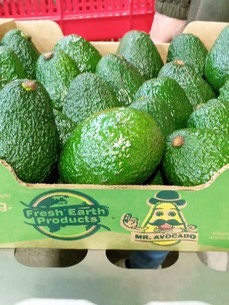
In the near term, the sector is working with measured goals. "We are not going to exceed 50 containers in the first season," he says, referring mainly to planned shipments to Europe. The five-year plan is more ambitious, with projections of between 1,200 and 1,500 containers annually destined for the United States.
 © Fresh Earth Produce
Commercially, Honduras is aiming to differentiate itself through its production window. "Our season runs from October to February. We do not overlap with Peru and only partially with Colombia, and that opens space for us." That is paired with a medium-sized fruit profile that is in demand in European and Asian markets.
Another key focus is sector organization. Villatoro is promoting the creation of the Honduran Institute of Avocado and Highland Crops, or IHACA, modeled on the country's coffee institutions. "The problem is not the crop, it is the lack of structure. We need to train, organize, and support growers." International experience has also shaped the strategy. The team took part in export programs from Colombia to the Middle East.
"We already know where the bottlenecks are, both in the field and in logistics." For the future, Villatoro says the country's potential is clear, but execution now depends on institutional decisions. "Honduras has the land, it has the growers, and it has the opportunity. What is missing is execution. The next step is the creation of IHACA, securing access to the U.S. market, and structuring the sector."
 For more information:
Fernando Villatoro
Fresh Earth Produce
Honduras
Tel.: +504 3170-0803
[email protected]
[email protected]
www.fepsa.hn