German-born Valerie Whyte experiences avocado farming from both sides: on the one hand, there are her friends in Germany who share their concern at what they see in the media of destructive, water-hungry practices in avocado farming. On the other hand, there is her lived reality of farming avocados on Springfield Farm, outside Makhado (Louis Trichardt) in South Africa's Limpopo Province.
"The perception that avocado farming is environmentally degrading and deprives communities of water is very frustrating for us. We are thrown into the same boat as those depicted in certain documentaries," she says of the farm, which the zoologist has made her home. "We've got dry land (non-irrigated) avocados, we barely irrigate because we're in this high rainfall area with beautiful soils."
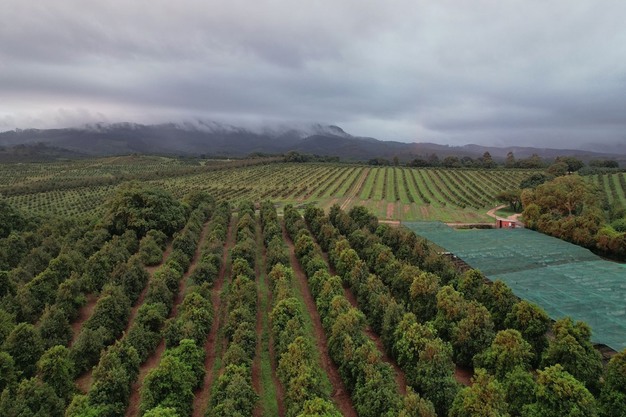 © Springfield FarmsSpringfield Farms in the Soutpansberg Mountains, Limpopo, align with the approach towards Integrated Farm Management promoted by UK-based Linking Environment And Farming (LEAF)
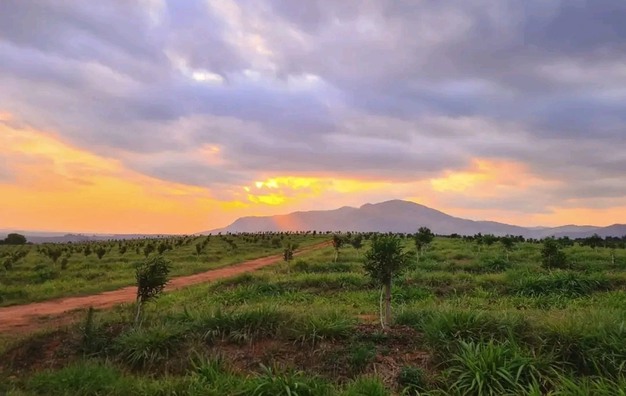
A quarter of the farm is still indigenous forest with wildlife – leopards move between farms along the Soutpansberg mountain range, and only five per cent of the COP 2030 target of 30% protected habitat on a farm, which she has made the farm's target as well, along with becoming net zero.
They've commenced growing seed collected from the forest to replant when harvesting their timber; a division on the farm from which they're reducing, in favour of letting the forest circle out.
Frustrating start 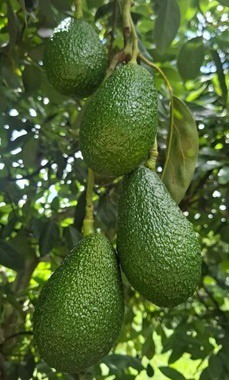 © Springfield FarmsHeavy rains in January delayed the start of the early Fuerte avocados, impacting the moisture content, and, frustratingly, they had to wait for moisture levels to drop.
"That was very frustrating because this early window on the empty local market is one of our best returns on the farm. So, when we missed that, we knew that it would have a huge financial implication. We switched our Fuerte to export when we knew we had missed a significant portion of our local market window. With the Hass, we have a narrow window to get into the UK and EU market before Peru comes in and floods the market."
Their Hass avocados, exported by Three Farms in which Springfield Farms is a shareholder, have started arriving in the UK and Europe. "The export window closes quickly, but fortunately, we have secured fixed retail contracts". Depending on demand, she says, they sometimes export Lamb Hass, Pinkerton, and Ryan.
"We're net zero just by being who we are."
Three years ago, their exporter, Three Farms, alerted them to a call for participating farms in a programme run by UK charity Linking Environment And Farming (LEAF) to follow how farms whittle down their carbon footprint through a programme called Journey to Net Zero.
LEAF had hitherto only been active in the United Kingdom and was looking for an international partner: in Whyte and Springfield Farms they found an affinity. "They were blown away when they visited the farm," she remarks.
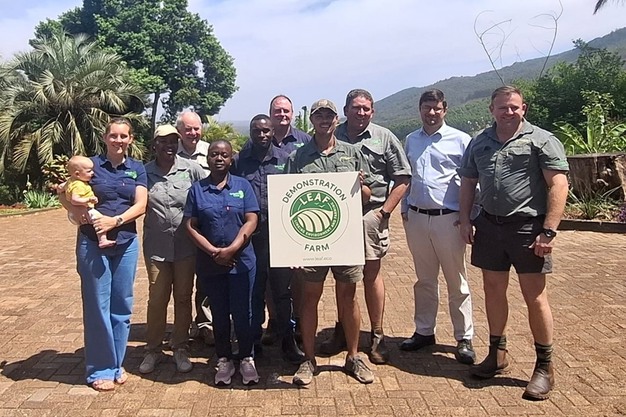
The three-year project was a very steep learning curve during which they gained a lot of confidence, she says, and emerged as a LEAF-certified farm and also as the only non-British LEAF demonstration farm.
Ahead of the launch of Springfield Farms as a LEAF demonstration farm, Whyte expected it to be regarded by the industry at large as yet another onerous accreditation, but the response was unexpectedly curious. "I think with the environmental accreditations becoming increasingly important, people are very interested. It's nothing that's exclusively required yet, but I think everybody knows it's moving in this direction. In a couple of years, it could be that if you want to export, you will need an environmental accreditation."
 © Springfield Farms
At their launch as LEAF demonstration farm, instead of scepticism from audit-fatigued farmers, Whyte was delighted by the level of interest in the farming philosophy
Carbon measurement in its infancy
Just before being accepted into the Journey to Net Zero programme, they'd participated in a carbon emission benchmarking study on macadamias, run by the South African Macadamia Growers Association (SAMAC). What was missing from their perspective was the sequestration, she says, which makes a huge difference on a forested farm. "As a farmer, you can't avoid inputs like diesel and fertiliser that you should apply. But especially as tree farmers, that should obviously count for something? And it turned out that once we did our footprints, we were already net zero just by being who we are."
Clients are increasingly asking for a carbon footprint, but unless it's tailored to that particular farm, it's not accurate, she believes.
"So even though we technically are net zero, we still have big emissions that are mainly diesel use, fertiliser, and electricity. So you still want to look at those and obviously reduce them because that's also your major financial costs. Your carbon emissions are associated with some of your big expenses."
 © Springfield Farms
Walking through the farm with open eyes
Whyte says it has been gratifying to witness the mind shift among farm employees who now "walk through the farm with open eyes", as she puts it.
Similarly, consumers should be educated that many avocados are farmed in an environmentally friendly way, conserving water and working with nature.
"Ideally," Whyte believes, "well-informed customers and retailers should acknowledge the strides taken by avocado farms like Springfield Farms and say: 'We're going for the South African avocados before we buy from elsewhere', due to their low impact on the environment and much lower irrigation requirements."
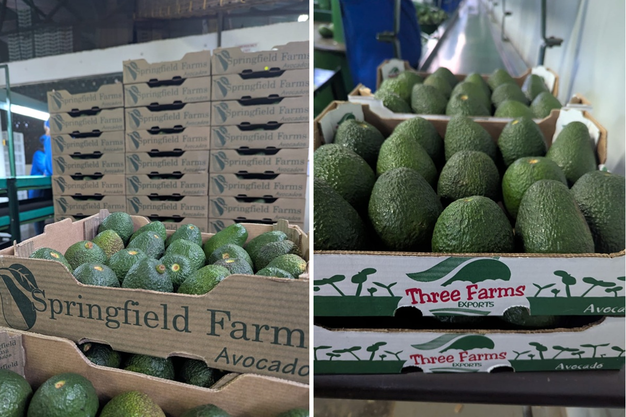 © Springfield Farm "Well-informed customers and retailers should say: 'We're going for South African avocados'"
For more information: Valerie Whyte
Springfield Farm
Email: [email protected]
https://leaf.eco/news-and-events/news/growing-global-springfield-farm-launch-2