A team of researchers from Stellenbosch University (SU) and the Agricultural Research Council has, for the first time, successfully edited the DNA of a woody crop plant in Africa by making precise changes to its genetic material.
Using CRISPR technology, the researchers "switched off" a single gene (VvDMR6.1) in grapevine plants. This gene is linked to how plants respond to disease. The change made the plants less vulnerable to downy mildew, a major disease affecting vineyards globally.
According to the researchers, the study shows how a single targeted genetic change can influence multiple stress responses in plants.
 © Stellenbosch University
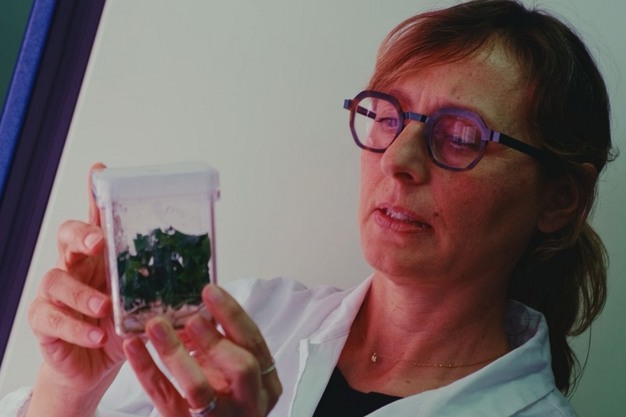
"By editing a gene that makes grapevines more vulnerable to disease, we were able to reduce this vulnerability while also influencing how the plants respond to water shortages. Our research shows how modern gene or genome editing technology can be used to improve grapevines so they are better able to cope with disease and droughts," said lead researcher Dr Manuela Campa from SU.
"This represents a step toward integrating modern genome editing approaches into African crop improvement programs, particularly for high-value horticultural crops such as grapevine."
Campa noted that genome editing techniques such as CRISPR have increasingly been used to modify genes and improve plant resistance to disease.
An additional finding was the response of the edited plants to water shortages. "These plants responded better to dry conditions. They were able to conserve water more effectively, suggesting they may be better suited to increasingly dry conditions linked to climate change.
"This is an exciting step forward because it indicates that we can make precise changes to plants that improve more than one important trait at the same time."
 © Stellenbosch University
With grapevines under pressure from disease and environmental changes, Campa said the study is timely as these challenges are expected to increase.
"Viticulture faces challenges, as disease outbreaks increase after periods of environmental stress. Because grapevines are a high-value crop globally and are important to South Africa's agricultural sector, we must develop varieties that can tolerate multiple stresses simultaneously. This can help produce grapes under more challenging conditions." According to Campa, the findings highlight the potential of genome editing to improve crops in Africa.
"While genome editing has been widely applied in model plants and several crops globally, its use in woody perennial species has remained limited because of their complex regeneration systems and long breeding cycles.
"This work demonstrates that genome editing technologies can be applied to perennial crops in Africa and opens the door to further research on sustainable and climate-resilient crops."
Campa added that further studies are needed to evaluate the edited plants under field conditions.
For more information:
Stellenbosch University
Tel: +27 21 808 9111
Email: [email protected]
www.su.ac.za