Costa Rica's 2026 pineapple season is showing signs of recovery after a start marked by production limitations, in a context where price stability contrasts with logistical, exchange rate, and climate challenges.
According to Luis Gustavo Arrieta, administrator and foreign trade manager of Ambrosía Fresh, the sector has had to deal with a difficult start. "Our volumes are currently recovering," following a delay between January and March due to adverse weather conditions in 2025 that took a toll on the plantings.
 © Ambrosía Fresh
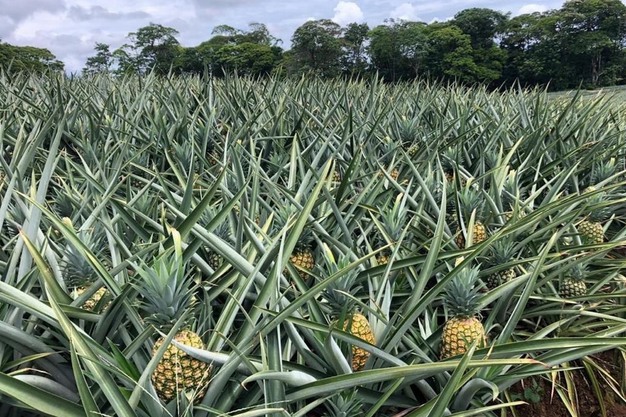
Currently, production is showing steady improvement, with high volumes expected through week 30. However, the sector anticipates a critical period thereafter. "We expect to have a small gap of about 12 weeks that will make it challenging to sustain our programs," says Arrieta.
The U.S. market has been the main destination for Costa Rican pineapples for decades. "The United States has been our most important market for the last 20 years," says the exporter, while Europe, with Italy as the main destination, presents greater operational restrictions.
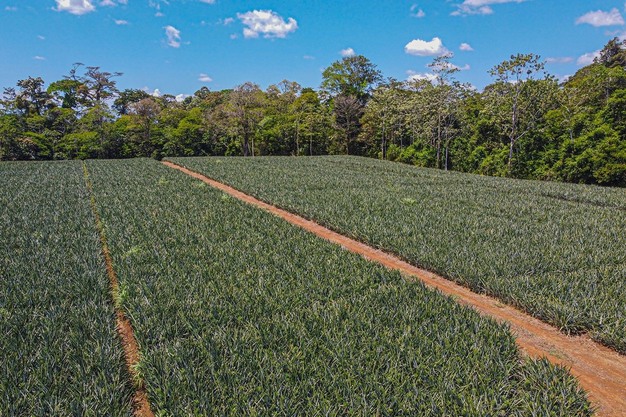
In this regard, logistics to the European market remains one of the main bottlenecks. "Every week we are in a constant struggle to see whether it'll be possible to make any shipments," he says. This is due to the limited availability of shipping space and the high demand on these routes.
 © Ambrosía Fresh
As for market behavior, international prices for fresh pineapple have remained relatively stable compared to 2025. One of the key factors has been the lower pressure exerted by the processing industry. "That direct competition we had has considerably lowered its prices, so less pressure is exerted on the fruit intended for export."
"The price of pineapples with crown currently ranges between 8.5 and 9.5 dollars per box in Ex Works conditions, with a slight downward trend expected due to the seasonal increase in supply," he says.
Despite the stability in sales prices, logistics costs have recorded significant increases, especially on routes to Europe. "There are lines that have increased from 350 dollars to as much as 1,500 dollars per trip," says Arrieta.
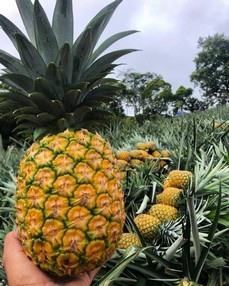 © Ambrosía Fresh Domestically, the exchange rate has become a key factor for the fruit's profitability. "The exchange rate is down by between 25 and 35 colones per dollar, and this is causing financial losses," he says. It is directly affecting a dollarized business with local costs in national currency.
In the international market, Costa Rican pineapple continues to stand out for its quality, especially the MD2 variety. "Our weather, geographical location, and quality give us an edge," says Arrieta.
"With weekly export volumes ranging between 10 and 20 containers, shipped mainly to the United States and Italy, the exporter aims to consolidate its position in these markets and gradually increase the supply," he says.
 For more information:
Luis Gustavo Arrieta
Ambrosia Fresh
Costa Rica
Tel.: +506 2461 0492
[email protected]
www.ambrosiafarmcr.com