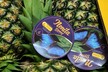
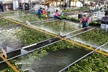
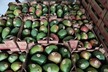
Bringing the authentic, fresh tropical flavour of a Costa Rican pineapple within reach of every European consumer, that is the ambition of Fertinyc, a family business run by Wilbert Gómez Rojas and his wife Hellen Madrigal Durán. "The key is giving the customer the real taste of the tropics. Healthy pineapples, ready to eat, beautiful, affordable, and with an honest shelf life. That's our ambition. I work on that every single day," says Wilbert.
Betting on yellow: The innovation that changed everything
About fifteen years ago, an Italian customer visited the Costa Rican farm and said something Wilbert still recalls with a degree of amusement: he wanted to import yellow pineapples. At the time, the entire Costa Rican industry was exporting green. "I told him: you're crazy. We only do green. Why would we do anything different?" But the customer held his ground, and Wilbert eventually came around.
 © FreshPlaza
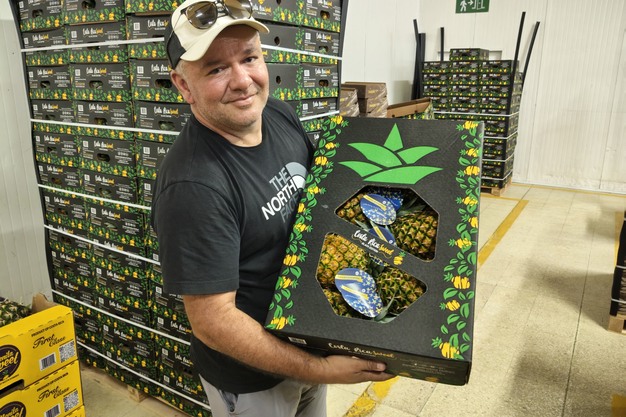
Wilbert Gómez Rojas, commercial manager of Comercializadora Fertinyc
Growing a yellow pineapple is technically demanding. Every piece of fruit is wrapped on the plant to encourage the natural development of colour, though the results are never entirely predictable. The process requires selective, daily harvesting, allowing each fruit to reach the desired colour point rather than picking everything at once, as is done with conventional green pineapple. Colour grades are sorted at the packing facility, starting with full green, mid-colour, or full colour, depending on the customer's order and the transit time to the destination.
Italy remains the reference market for the yellow programme, accounting for around 40 per cent of Fertinyc's total volume. "Italy isn't just Europe," says Wilbert with a smile. "They have more taste." Premium and foodservice markets are the primary targets: fresh-cut fruit processors, hotels, restaurants, and fine food distributors who genuinely care about flavour and presentation.
Three brands, each with its own name and story
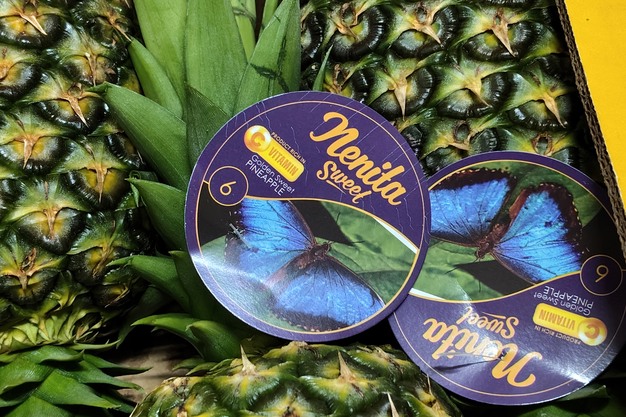
Fertinyc exports under three brands: Nenita (a nickname for a daughter named Helena), Bella Sweet (named after his youngest daughter), and Queen Sofia (in honour of the daughter of a close friend and valued customer). "We don't have more brands because we don't have time to create more... and because we don't have any more daughters," he laughs. Each brand is assigned exclusively to a single customer per market, creating a bond of association and loyalty that large commodity suppliers simply cannot replicate. "We work on exclusivity: one brand, one customer." His relationships with Italian partners go back twenty years; with British customers, fifteen. "These aren't transactions, they're partnerships."
The packaging reflects that same attention to identity. The company designs carefully crafted presentation boxes, including a distinctive "whisky box" format and a black edition, which have proven particularly effective as seasonal gifts for Easter, Ramadan, and Christmas. "We were the ones who started this. Now we see it copied by most of the export companies in the region, though sometimes we're not sure whether to feel flattered or frustrated."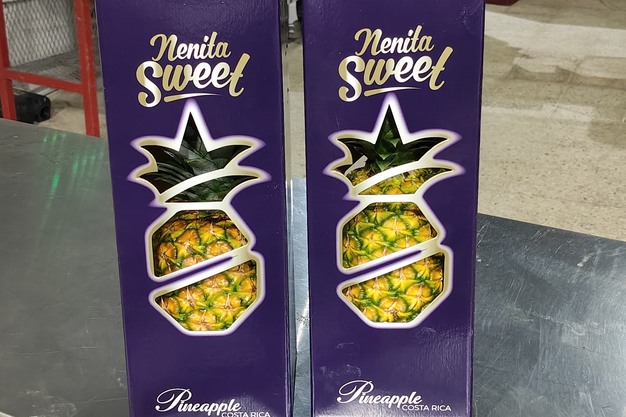 © FreshPlaza
Crownless pineapple currently accounts for around 20 per cent of Fertinyc's production. This side of the business grew largely through a relationship with a British distributor supplying Tesco. The UK remains a relevant market, though Wilbert acknowledges that the complexity introduced by Brexit has made it a trickier proposition.
Soil health as the guiding principle of the business
Fertinyc's approach to pineapple growing starts from a core belief: healthy soil produces better fruit. Wilbert draws on the analogy of the forest to explain it: "When you go into the mountains, you don't need fertilisers or pesticides. There's a balance between the bad and the good." The company's goal is to recreate that balance on the farm, introducing beneficial bacteria and fungi into the soil, reducing synthetic inputs, and letting the biological ecosystem do the work that chemicals would otherwise have to do.
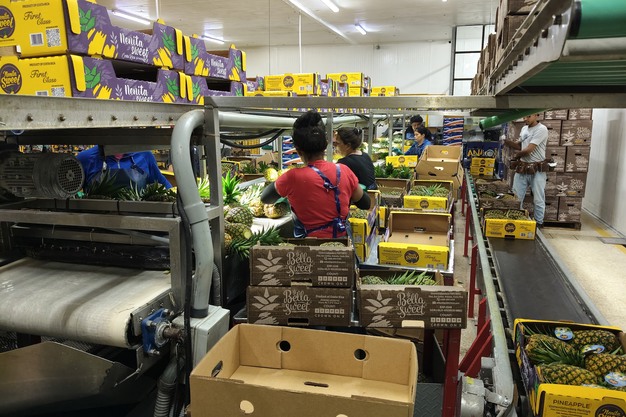
The results speak for themselves. Fertinyc uses 60 per cent fewer pesticides than a conventional pineapple farm. And the difference shows up in the fruit. "When we work with customers, they tell us: Wilbert, your pineapple normally has one extra week of shelf life. It's because of the special treatments, the organic products, and the biofertilizers that they help keep the pineapple fresh."
 © FreshPlaza
The company has also built the infrastructure needed to sustain this model from within. It runs its own laboratory for producing biological inputs, and its own biofactory, a dedicated facility for producing liquid biofertilizers through fermentation using nutrients, fungi, and microorganisms. This allows Fertinyc to control the quality and consistency of its inputs in a way that would simply not be possible if it relied on outside suppliers.
Diversification: Wine, jam, and a vision for the future
One of the most surprising aspects of Fertinyc is that it produces and markets pineapple wine and pineapple jam, and has begun exporting both, on a small scale, to Europe. The wine was sent to the Netherlands in December as a gift through an existing customer. The jam is far from ordinary: it contains 95 per cent pineapple, with a minimal amount of sugar. "We cut the pineapple and work our magic." A new production facility is currently being built to scale both products, and full commercial export to Europe is expected to begin in the near future, once labelling compliance has been finalised.
"We need to give the pineapple more value," says Wilbert. Whether as fresh-cut fruit, frozen, juice, wine, or jam, the strategic ambition is always the same: to capture more value along the chain, rather than leaving it for others.
Challenges: Costs, climate, and a changing world
Wilbert is candid about the pressures the business faces today. Rising production costs, labour shortages, and exchange rate challenges are all part of the picture. On top of that, the Meteorological Institute has advised growers to prepare for an unusually dry summer, which could hit pineapple volumes the following year. "I'm very worried."
 © FreshPlaza
On pricing, he notes that last year's prices were historically high and were already approaching what he calls "the breaking point", the threshold beyond which European consumers reach for bananas, mangoes, or citrus instead. His response is to work closely with customers on agreed pricing. "This year, I'd rather do a very close deal with customers. Try to guarantee the end customer a stable price."
From cassava to pineapple
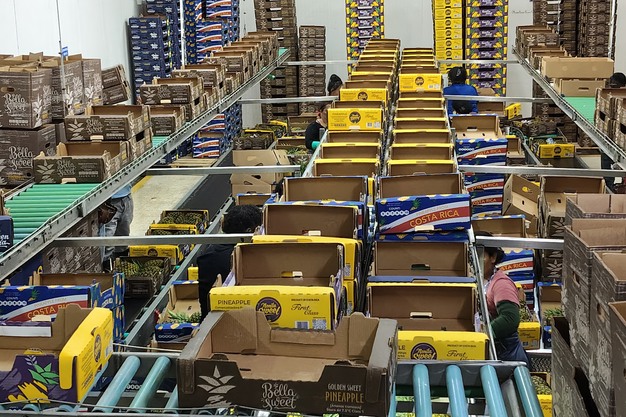
Fertinyc currently cultivates 500 net hectares of pineapple and exports between 20 and 25 containers per week. Wilbert's grandfather worked these same lands decades ago, growing pineapple and cassava and raising cattle. A crisis in the cassava business left the founding team with almost no capital, but they had cows. "The only thing we had were cows. And the only thing we had from the cows was manure." That's where it all began: Wilbert started experimenting with organic fertilisers. A small biotechnology room became a laboratory. And that laboratory became the foundation of a philosophy that now defines the entire company.
 © FreshPlaza
Its certifications include GlobalG.A.P., Fairtrade, and SMETA. Hellen, Wilbert's wife, manages the financial and administrative side of the business, while he handles commercial operations and production. A family business in every sense of the word.

For more information:
Wilbert Gómez Rojas
Fertinyc
Pital, San Carlos (Costa Rica)
Tel.: +506 6196 9639
[email protected]
www.fertinyc.com