The Greek strawberry season is still in full swing, with large volumes being harvested the past few weeks, says Nikos Arvanitakis, sales manager of Arvanitakis Fruits, which manages the Fruiton brand: "The current strawberry season got off to a good start during the planting stage. However, heavy and persistent rainfall created several challenges early on. This was followed by a significant production peak, mainly driven by the high share of early varieties, particularly during weeks 13, 14, and 15. Despite these challenges, overall fruit quality has remained very good. Prices are shaped by the balance between supply and demand, although they are also significantly influenced by competition, particularly from Spanish producers."
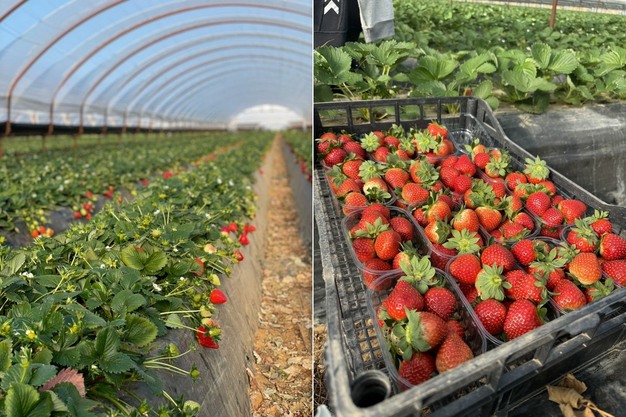 © Arvanitakis Fruits
In recent years, demand for Greek strawberries has shown steady growth, Arvanitakis states. "The sector actively participates in promotional programs with major retail chains and supermarkets, continuously expanding its presence in European markets. There has been a notable increase in exports to Central and Eastern Europe, where Greek strawberries are gaining market share. Greece is demonstrating strong momentum in this segment and, by leveraging its strategic geographical position, has the potential to play a leading role in these markets."
According to Arvanitakis, the main challenges currently facing the Greek strawberry sector are largely related to rising costs across the entire supply chain: "The main difficulties include increased transportation costs, higher overall production expenses, and significant increases in fertilizer prices. In addition, efficient water management remains a key challenge. Addressing these issues is essential to ensure competitiveness in international markets, while at the same time maintaining strawberry cultivation as a profitable and sustainable activity for growers."
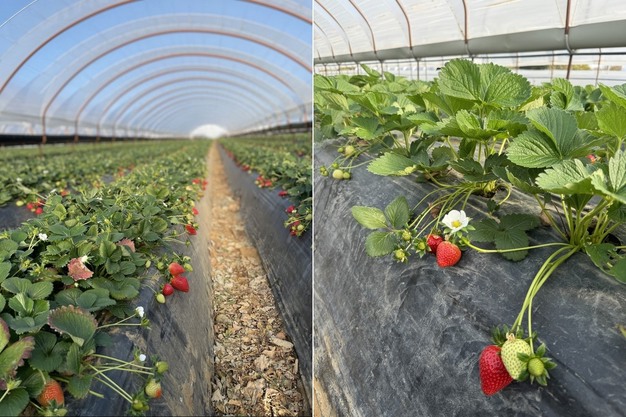 © Arvanitakis Fruits
"Strawberry prices started at relatively high levels, due to limited supply at the beginning of the season," Arvanitakis continues. "As more volumes were harvested, prices gradually adjusted to the more balanced market levels. However, prices continue to be influenced by higher overall costs, as well as international competition. So far, price developments have allowed for a relatively balanced market situation. It's also worth noting that there are still approximately four weeks remaining in the season, meaning that the market may continue to evolve. Overall, there is cautious optimism for the remainder of the campaign."
For the remainder of the season, Arvanitakis remains cautiously optimistic. "Provided that weather conditions stay favorable, the harvest is expected to continue smoothly, with consistent quality levels. However, the end of the Greek strawberry season is influenced not only by domestic factors but also by the local production in other European countries. In particular, countries in Central and Eastern Europe, such as Romania, Serbia, and Poland, begin their own production from mid-May onwards. This typically leads to a gradual decline in demand for Greek strawberries in these markets. Overall, the course of the season will depend on the balance between supply, demand, and international competition, with growers remaining optimistic about the coming weeks," he concludes.
 For more information:
Nikos Arvanitakis
Fruiton by Arvanitakis Fruits
Tel: +30 262 307 2194
[email protected]
www.arvanitakisfruits.com