Texas strawberry producers reported a gradual start to the 2026 season following early establishment issues and a spring frost. According to Texas A&M AgriLife Extension, plant development has improved, and supply is expected to increase over the coming weeks.
"It's been a challenging year, and really the last couple of years have been difficult for strawberry growers," said Larry Stein. "Plants were slow to establish, but they are coming on now, and we should have good supplies for the next two to four weeks."
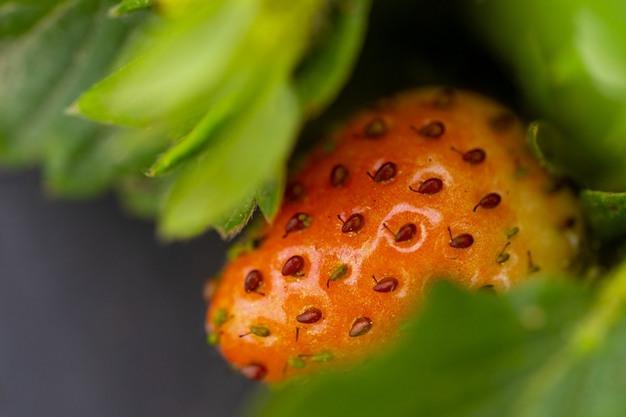
During establishment, some growers reported losses of 10% to 30% of transplanted plants, which were linked to plant condition rather than grower practices. "The crown of the strawberry plant is extremely sensitive to drying out and cold," Stein said. "If it's compromised anywhere along the way, that plant just won't take."
 © Texas A&M AgriLife
Cooler winter temperatures and a freeze event in early March delayed early production and fruit set. Growers in the Hill Country, North Texas, and areas near Houston reported more stable development, while South Texas experienced a slower ramp-up. Recent dry conditions have helped limit disease pressure, although rainfall remains a concern as harvest activity increases.
"Rain and hail are always the biggest threats this time of year," Stein said. "Rain can interrupt harvest and create disease pressure, but so far most growers have avoided major weather damage."
Production practices continue to support fruit quality. Most Texas strawberries are grown on plastic mulch with drip irrigation, which helps keep fruit clean and reduces rot, particularly in heavier soils. Pest pressure from spider mites was reported in some fields, but growers identified infestations early and managed them before they escalated.
Temperature trends remain a factor for yield and harvest duration. The ideal range for strawberry production is between 60 and 80 degrees. "Once we consistently get above 85 degrees, production will drop," Stein said. "If these cooler temperatures hang around a bit longer, that will help extend the season."
Market demand for locally grown strawberries remains steady. Growers are marketing fruit through pick-your-own operations, farm stands, farmers' markets, and wholesale channels. Prices are reported to be in line with last year.
"Local strawberries are a premium crop, and growers are selling everything they pick and getting the prices they're asking," Stein said. "Even with challenges, Texas strawberry quality continues to be outstanding."
Across Texas, field conditions remain mixed. Some regions reported scattered rainfall improving soil moisture and supporting forage and crop growth, while others continue to face dry conditions. Planting activity for row crops is ongoing, with growers preparing fields and managing irrigation as needed.
To view the full report, click here.
For more information:
Laura Muntean
Texas A&M AgriLife
Tel: +1 601 248 1891
Email: [email protected]
www.agrilifetoday.tamu.edu