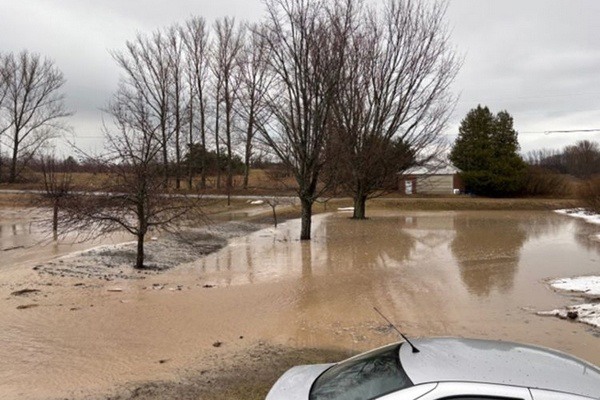
Many orchards across northwest Michigan are impassable due to standing water, raising concerns about early disease control applications.
Weather report
Northwest Michigan saw slightly warmer temperatures over the past week, with daytime highs just above 60°F and overnight temperatures forecast in the 40s. Humidity remains high, with fog from melting snow. The region has accumulated 108 GDD base 42 compared to an average of 97, and 34.9 GDD base 50 versus a 35.4 average.
 © MSU
© MSU
Rainfall has been heavy, with 6.24 inches recorded in April, including 3.75 inches over the past three days. Flooding has affected orchards and roads across Leelanau County, with flash flood warnings in place. Standing water is notable despite sandy soils that typically drain quickly.
Further rain and storms are forecast through midweek, with cooler, drier conditions expected later. Temperatures in northern Michigan are expected to reach the low 60s before dropping into the 40s, with frost risk early next week.
Crop report
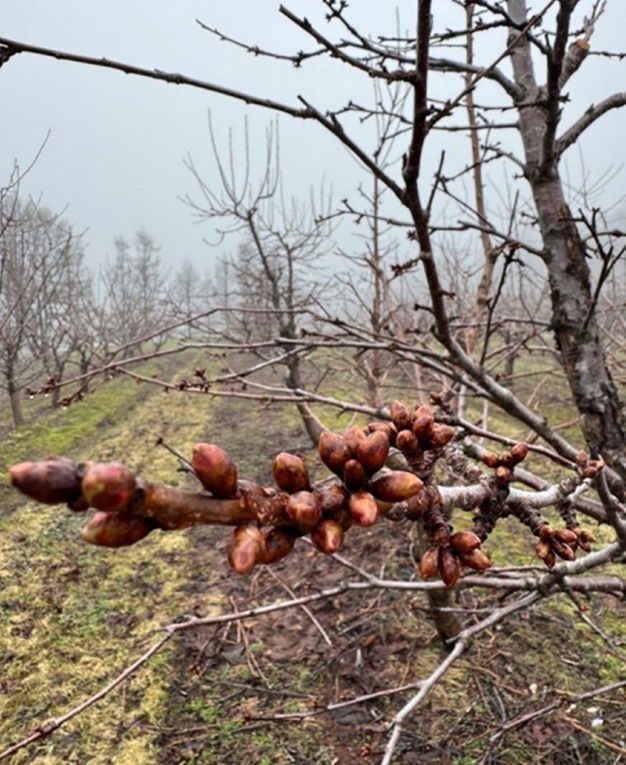
After a prolonged cold period, warmer temperatures are accelerating crop development. Growers are preparing for early fungicide and oil applications, but access to orchards is limited by wet conditions.
 © MSU
© MSU
Crop development varies by region. In southwest Michigan, pears are at first white, peaches are beginning to bloom, and many plums and apricots were lost to frost. Tart cherries are in tight clusters, while sweet cherries remain less advanced. Strawberries and blueberries are in a tight cluster.
In west central Michigan, apples range from green tip to half-inch green, with growers applying sprays where possible. In northwest Michigan, pears are at swollen bud, cherries are moving to green tip, and apples are beginning to show early green tissue.
Disease report
Rapid tissue growth combined with continued rainfall is increasing pressure from apple scab. Limited spray windows due to wet orchard floors and wind are creating challenges. Michigan State University recommends applying captan and mancozeb, with additional products if buds are not fully open, to reduce early-season disease pressure.
Insect report
Dormant oil applications are recommended to manage pests such as San Jose scale and woolly apple aphid. Timing is important, particularly in sweet cherries, where sensitivity to oil requires monitoring of green tissue. Growers are advised to avoid applying sulfur or captan close to oil treatments due to the risk of phytotoxicity.
For more information:
Michigan State University
Tel: +1 517 355 1855
www.canr.msu.edu