A new research trial is supporting Tasmania's $66 million cherry industry as it responds to climate variability, including hotter, drier summers and more frequent rainfall events, while maintaining fruit quality.
Dr Leticia Reis, tree fruit physiologist at the Tasmanian Institute of Agriculture, is leading commercial field trials as part of the national project Optimising protected cherry production (CY24004), led by the New South Wales Department of Primary Industries and Regional Development. The trial examines how rain covers affect orchard microclimate, tree growth, and fruit quality at the branch level. Findings aim to support management strategies for rain protection systems.
 © University of Tasmania
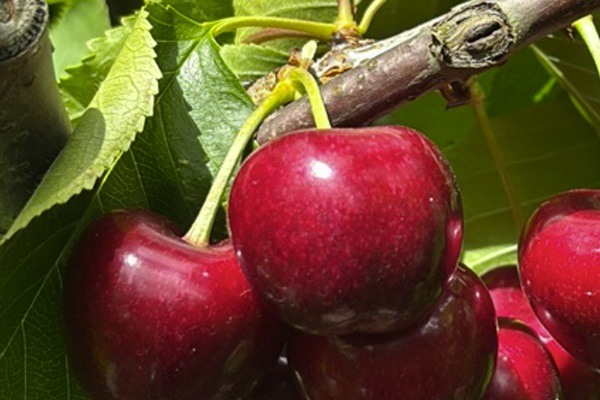
"Rain covers are commonly used in sweet cherry orchards across Tasmania and are an effective and practical tool to reduce risks such as fruit cracking. Cracking can happen during extreme rainfall at harvest time and result in significant economic losses for growers," Dr Reis said. "While rain covers provide effective protection for fruit, they alter the orchard microclimate, including reducing sunlight, warmer temperatures, and moisture in the air. They also change the quality of light reaching the trees, much like wearing tinted sunglasses.
"Trees respond to these changes in the microclimate, which directly impacts fruit quality."
An experimental site has been established in a commercial orchard in the Tamar Valley, using sensors to monitor light, microclimate, and leaf physiology, alongside fruit quality assessments at harvest. The project also includes collaboration with the TIA Ag Tech Innovation Studio to develop real-time monitoring systems.
The trial is hosted by AAAW Group at Calthorpe Orchards, where rain covers have been in use for five years.
"We've seen significant investment in rain covers across several Tasmanian orchards in recent years. With several operations in the industry now using them, I don't see a future without growing under rain covers."
"The next step is to understand how to use rain covers as effectively as possible. We must invest time and money into research to test what we're seeing in the orchard and back it up with evidence to give growers confidence in how rain covers impact fruit quality and productivity.
"In particular, I would like to see some answers around how much light we are losing, whether that's a big deal, and how much of a limitation it puts on us. We can see the benefits of using rain covers, but we also need to address the challenges."
The research team is inviting growers to participate in orchard trials and surveys to assess the impact of rain covers on yield and quality. The project is funded by Hort Innovation, supported by the cherry research and development levy and the Australian Government.
For more information:
Chelsea Wingrove
University of Tasmania
Tel: +61 3 6324 3020
Email: [email protected]
www.utas.edu.au