The 2025/2026 fresh strawberry season in Egypt is drawing to a close, while the processed strawberry season is in full swing. This season has been particularly tough, marked by oversupply, issues with seedling quality, and falling prices. Khaled Albana, CEO of Legacy Farm for Strawberry Production and Export, reflects on this season and the lessons it has brought.
 © Khaled Albana, Legacy
Fresh strawberries give way to processed strawberries in most markets
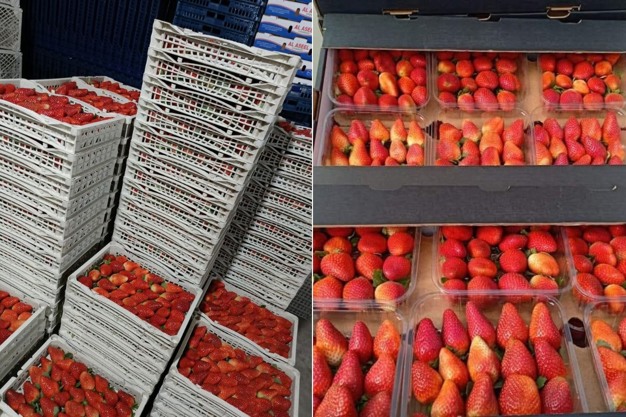
Like every season, fresh strawberry exports at this stage (late March) continue to the Gulf countries despite the abrupt halt in shipments caused by the war in the region. Albana states: "At this late stage of the season, following the end of the peak period for fresh strawberry exports to European markets and the United Kingdom, our export activities are now primarily focused on the global industrial processing sector. As we export strawberries for drying and freezing to markets around the world, Poland currently accounts for the lion's share of this demand, with its processing facilities operating at full capacity. At the same time, Gulf countries continue to import fresh strawberries, underscoring the premium positioning and high quality of Egyptian produce in these vital regional markets. »
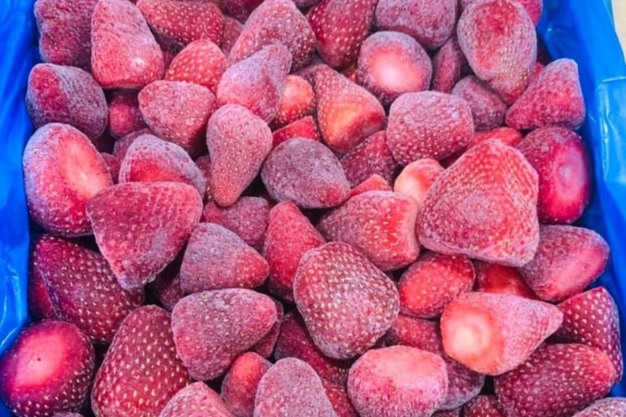
The freezing industry rescues the season
The 2025/2026 fresh strawberry export season was preceded by a sharp increase in cultivated acreage across Egypt, which many growers estimated at 30% compared to the previous season. This rush to increase production naturally sparked concerns among growers, leading to a race for early harvests and an early start to the season. Albana states: "The season began with significant logistical and production challenges. The sharp increase in supply at the start of the season was a direct result of an unprecedented expansion of cultivated acreage, rather than an increase in actual yield per hectare. In reality, overall exportable production was particularly low due to the poor quality of the plant tissue, which hindered the plants' development and resilience. "
 © Khaled Albana, Legacy
According to the exporter, fruit processing has once again proven to be a pivotal driver of the Egyptian strawberry industry this season. He explains: "Industrial processing markets, which encompass both drying and freezing, have proven highly effective at absorbing exported volumes and currently represent our most active processing destination, particularly in Poland, while Gulf countries are a pillar market for our fresh strawberries."
Prices punished oversupply
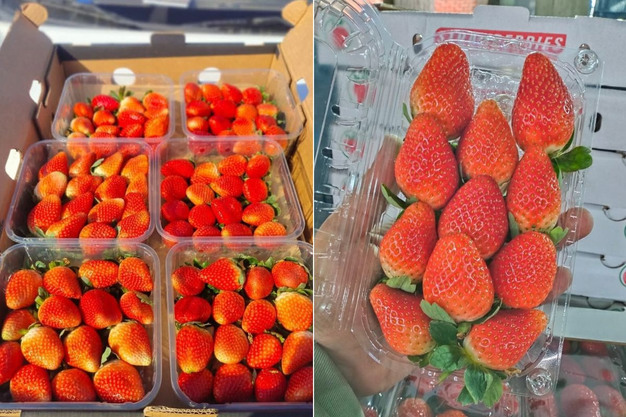
Yet it was precisely in the Gulf markets that prices, at the start of the season, proved discouraging for many producers, before stabilizing later in the season. Albana describes significant price volatility resulting from a massive supply: "Prices were highly volatile at the start of the season and led to prices falling to levels that did not cover sharply rising production costs. This season, production costs skyrocketed to around 500,000 EGP per feddan ($9,500 at the current exchange rate; Feddan = 0.43 ha), compared to 300000 EGP last season -bearing in mind that yields were higher last season- thus placing a heavy financial burden on producers. Nevertheless, prices subsequently stabilized to align with those of the previous season, reflecting the fruit's intrinsic quality and sustained demand from the global industrial processing sector and the Arab Gulf markets."
 © Khaled Albana, Legacy
A reversal of price movement has, therefore, been observed this season. Historically, the start of the season has generally seen the highest prices, driven by early production. However, according to Albana, this season required more astute management of supply and demand to prevent a price collapse.
Lessons from the season
These results demonstrate that there are limits to how much acreage can be increased before prices collapse. Several Egyptian producers indicated throughout the season that they had learned their lesson: a reduction in production is necessary starting next season.
Albana echoes the same sentiment: "Building on the profound lessons learned this season, we are adopting a new strategy focused on 'quality over quantity.' We are making crucial decisions to ensure the sustainability of our operations, including optimizing cultivated areas to guarantee a balanced supply that matches actual global demand; and addressing the root cause of this season's low performance by using high-quality planting material and discontinuing business with suppliers who do not meet our technical specifications."
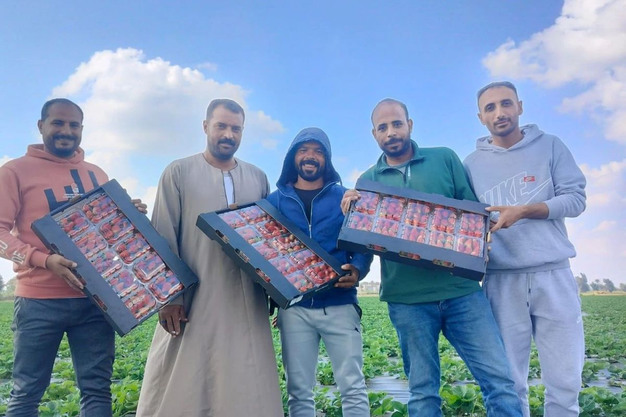
The quality of seedlings has been a frequent topic of discussion this season. In the case of Legacy Farm, Albana says he will take bold measures: "We are developing varieties that offer both high yields and resistance to fungal diseases (such as Neopestalotiopsis). In particular, the Sensation variety, in our experience, has performed poorly for both fresh export and industrial processing, proving extremely susceptible to disease and adverse weather conditions. We will therefore discontinue this strawberry variety next season."
 © Khaled Albana, Legacy
"The season has also taught us the critical role of processing, including the importance of specific markets like Poland. We will continue to rely on the global industrial processing sector, with a particular focus on Poland's thriving drying and freezing industries, to ensure optimal utilization of production for maximum yield," the exporter adds.
"There is another important aspect to consider, which concerns the structure of Egypt's strawberry sector. We have seen that formal contracting of producers is essential to ensure stable cash flows and protect farmers from the volatility inherent in the open market," Albana continues.
The exporter concludes on a positive note: "All in all, this season's results are far from catastrophic. Sustained demand proves that Egyptian quality is a benchmark for international buyers. We are proud of our ability to meet the needs of our markets, even under challenging weather and production conditions. The industry will continue to evolve and has already begun to adapt effectively to these dynamics mid-season, and we are confident that Egyptian strawberries remain an indispensable strategic choice in global markets."
For more information:
Khaled Albana
Legacy Farm for Strawberry Production and Export
Tel: +20 10 63973279
E-mail: [email protected]