During its March board meeting, the Michigan Apple Committee approved funding for 12 research projects focused on apple production, tree health, apple quality and more.
Every year projects are selected by a subcommittee that aligns with the research priorities of MAC. The goal is to select projects that improve profitability and production and explore new markets. MAC aims to back innovative research that boosts the reputation of Michigan Apples.
"We value proposals from various research institutions and centers of excellence. Michigan State University's proximity allows experts to collaborate and share advancing insights," said Diane Smith, executive director of Michigan Apple Committee.
The research subcommittee is made up of growers selected by the board of directors. They evaluate all the submitted research project proposals and recommend the funding to the board.
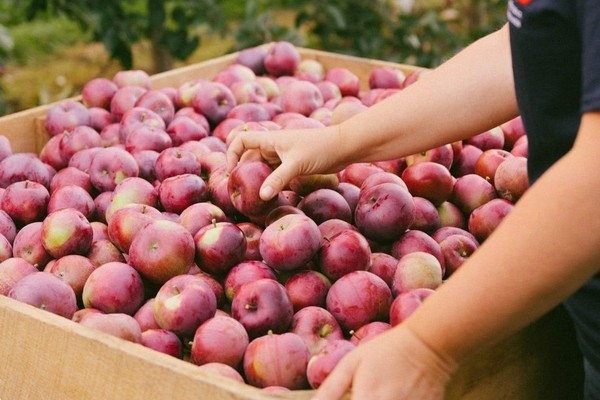 © Michigan Apple Committee
In 2026, the board allocated $321,035 in funding for the 12 projects that focus on topics like bloom consistency, disease and pest prevention, and apple storage. The individual projects are listed below.
- Joshua Miranda ($25,000): Cultural and Regenerative Orchard Floor Practices to Reduce Pests, Support Beneficials, and Improve Fruit Quality in Michigan Apples
- Julianna Wilson ($20,000): From sporadic to significant: tracking resurging apple pests in Michigan
- George Sundin ($26,202): Optimizing shoot blight control in trees of different ages
- Chayce Griffith ($10,860): Early Prediction of Bitter Pit Using Grower-Accessible Xylem Dyes in 'Honeycrisp'
- Courtney Hollender ($47,462): The Next Steps For Apple Harvest Window
- Jeffrey Andresen ($26,920): Updating the Enviroweather Apple Maturity Model: Better Harvest Date Predictions for Important Varieties
- Todd Einhorn ($37,342): Managing Honeycrisp fruit growth rate to mitigate bitter pit; ($25,386): Efficacy trials for early, mid, and late-season thinning
- Randolph Beaudry ($40,000): Understanding and Controlling Lenticel Breakdown in Apples; ($13,417): Application of CA during conditioning: Sensitivity of Honeycrisp to CO2-induced browning
- Mokhles Elsysy ($26,757): Nitrogen Storage Physiology and Floral Initiation in Honeycrisp and Gala: Defining Biochemical Thresholds to Reduce Biennial Bearing and Improve Bloom Consistency; ($21, 689): Microclimate Manipulation Using Soil Covers, Kaolin Clay, and Evaporative Cooling to Delay Dormancy Break and Reduce Spring Frost Damage in Apple Orchards
 For more information:
Michigan Apple Committee
Tel: +1 (800) 456-2753
[email protected]
www.michiganapples.com