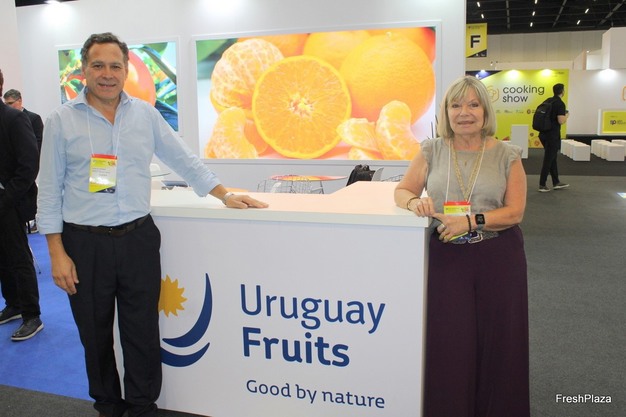
At Fruit Attraction São Paulo, Marta Bentancur from Upefruy shared Uruguay's perspective as a global fresh fruit supplier, emphasizing that although Uruguay is "a small country, it is highly capable of serving international markets." With only three million residents, the country produces enough food for ten times that number, strengthening its export reputation.
Upefruy, a prominent export organization under the Uruguay Fruits brand, handles over 90% of shipments of citrus, kakis, and blueberries. Its business model rests on four key pillars: origin, sustainability, export capacity, and governance. This strategy ensures the delivery of high-quality fruit, backed by certifications that meet international market standards.
 © Diana Sajami | FreshPlaza.com
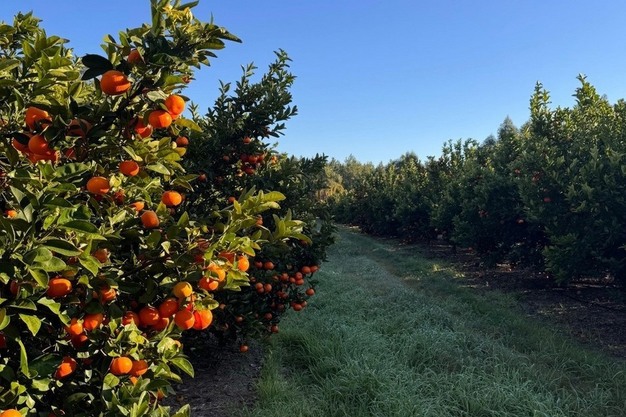
Uruguay's citrus industry, with over 60 years of export experience, is currently undergoing a major transformation. Bentancur states, "a new era of citriculture is emerging, focused on increasing quality: improved color and flavor." This shift depends on adopting new varieties, including locally developed ones, and making extensive technological investments across the entire supply chain, from cultivation to logistics.
Over the past decade, the sector has invested about $150 million in infrastructure, storage, and post-harvest processes. These upgrades aim to increase productivity, meet international standards, and remain competitive in key markets.
The agreement between Mercosur and the European Union marks a significant milestone. Uruguay has actively supported the deal and was the first in the bloc to ratify it. Still, its short-term effects are expected to be limited. "We don't anticipate a substantial immediate impact," Bentancur stated, as tariff eliminations will happen over a four to ten-year period.
 © Upefruy
Currently, tariffs are a major obstacle to increasing export volumes to the EU. This issue is exacerbated by competition from countries with tariff-free access, which undermines the competitiveness of products such as Uruguayan mandarins.
In the short term, Uruguay will focus its presence in Europe on oranges, lemons, kakis, and blueberries, with smaller amounts of mandarins. In the medium and long term, the aim is to regain market share in this segment through new varieties and quality improvements.
The country's strategy also involves maintaining strict sanitary standards and boosting international cooperation. According to Bentancur, the goal is to turn the agreement into "a powerful tool for trade in favorable and uncertain conditions."
For more information:
Marta Bentancur
Upefruy
Uruguay
Tel: +598 2916 0635
Email: [email protected]
www.uruguayfruits.com.uy