After anticipation about what is expected to be a record-breaking almond crop, Australia's growers have been dealt a late setback, with heavy rain disrupting the harvest.
Tim Jackson, CEO of the Almond Board of Australia, says the scale of the weather event has been significant. Some regions received "half or their total average rainfall in the space of a weekend", compressing months of rain into a few days and hitting windfallen almonds on the ground.
The timing has been critical. Almonds are typically shaken from trees and left to dry before processing, meaning a large portion of the crop is exposed. "Anything that's been on the ground or caught up in the rain will have moisture issues," Jackson explains, forcing growers into rapid drying efforts to bring product back within specification. "You can't sell an almond unless it's under 6% moisture."
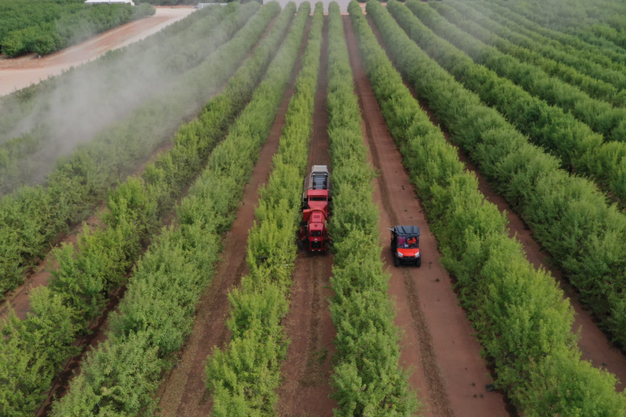 © Almond Board of Australia
While the overall volume of the crop is expected to hold, the composition of that crop will shift. Half of Australian almond exports are sold as in-shell products. "The rain will have an impact on the volume of product that is sold as in-shell," Jackson says, pointing to staining caused by the rain. "We will have some quality issues around in-shell for sure."
That has direct implications for the big export markets such as India and China. "It's clear that there'll be less table-ready in-shell for sale," he notes.
Even where almonds can be salvaged, the process has become more complex and costly. "In a dry year, you can just shake it, put it in a box and sell it," Jackson says. "Now you've got to shake it, dry it, get it under 6%, ensure it's of saleable condition and then sell it." The result is higher handling costs and inevitable downgrades. "The potential for quality downgrades because of the rain becomes much higher."
That comes on top of a sharp rise in input costs, creating a double whammy for growers. The ongoing geopolitical tensions have driven up fuel prices at precisely the moment they are needed most. "We estimate that as an industry we would be consuming around about a million litres of diesel a week during harvest," Jackson says. "Everyone's been able to get hold of it, but they're now paying double what they were paying four weeks ago."
The impact is immediate and substantial. "That's over a million dollars more that is going on to our cost of production a week," he adds. Crucially, those costs are not being offset by higher returns. "The prices haven't changed."
For an industry that had been on track for a standout year, the shift has been abrupt. "We were looking at our best crop ever, and Mother Nature's dealt us a pretty ordinary hand right at the death knell," Jackson says. "In those areas impacted by heavy rain, growers are a bit flat around what looked like such a good crop."
Still, it's a delay, not a write-off. Advances in drying technology mean growers can still recover value from affected product, albeit with more time and expense. "They'll still salvage value," Jackson says, "but it's just going to take longer."
For more information:
Tim Jackson
Almond Board of Australia
Tel: +61 438 871 312
Email: [email protected]
australianalmonds.com.au