The Senegalese watermelon season started a few weeks ago, with lower yields than expected and a generally lower supply in the European market due to the impact of the weather in South America. We are also just a few weeks away from the start of the Spanish season, which is expected to start slowly in terms of volume because of delays in some of the transplants in Almeria.
"Production at the start has been limited by the rains in Senegal during the first two weeks of January, something very unusual in watermelon-producing areas," says Joaquín Hidalgo, general manager of Grupo AGF Fashion. In addition, heavy rains have been recorded in the last part of the Brazilian watermelon season, which has taken its toll on the quantity and quality of the fruit and contributed to the supply on the market being lower than expected."
"There are very few companies producing in Senegal because it is becoming more and more challenging due to increasingly unpredictable weather and difficulties with the management of pests and diseases that are limiting yields," he says.
The Spanish watermelon harvest will start in Almeria, the earliest area, at the beginning of April. "In many cases, watermelon transplants that were due to take place in February were delayed due to the high prices of products such as cucumber and pepper. We therefore expect a slow start with limited volumes, without too much supply concentrated at the beginning," says Joaquín Hidalgo. "As far as Murcia is concerned, some of the first transplants have also fallen out of schedule, but for now, this should have a limited effect on the season overall," he says.
The main cause for uncertainty is the sudden increase in production costs.
Grupo Fashion recorded a slight increase in its watermelon production and total turnover in 2025. "The season was difficult because of oversupply in the markets. Nevertheless, we were able to meet our objective of continuing to grow organically. Our acreage is always carefully planned in order to keep production, and therefore supply, under control".
"Right now, the main cause for uncertainty is the increase in production costs that we are seeing as a result of the conflict in the Middle East, especially for fertilizers and transport," says Joaquín Hidalgo. "Shippers have been keeping us informed about prices on a weekly basis. The question is how far it is possible to raise consumer prices so that the activity can continue to be profitable for everyone.
Smaller watermelons increasingly trendy among consumers
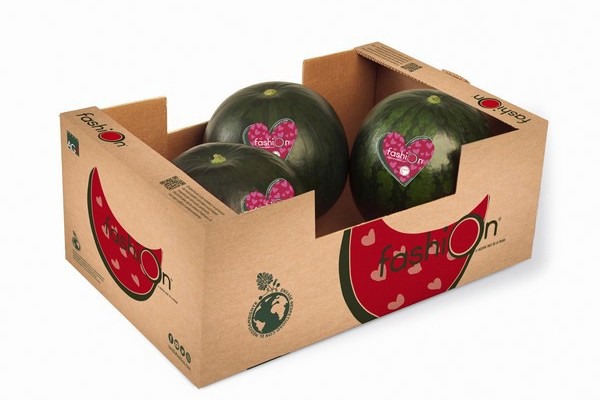
According to the Director of Grupo AGF Fashion, smaller sizes are increasingly attractive for consumers. "Family units are becoming smaller and smaller. In Spain, recent studies have revealed that around 60% of households are made up of just one or two people, while in other European countries this share is even higher and is expected to continue to increase. For that reason, our aim is to produce smaller watermelons with the same quality, making use of BASF Nunhems' programs."
 For more information:
Joaquín Hidalgo
Grupo AGF Fashion
T: +34 950 400 311
[email protected]
www.sandiafashion.com